The shaded parts of your garden can be just as vibrant and beautiful as their sunnier counterparts. With the right shade-loving perennials, you can add color, texture, and life to those low-light areas. Let’s explore some of the best shade-loving perennials to keep your whole garden looking great.
Foam Flower
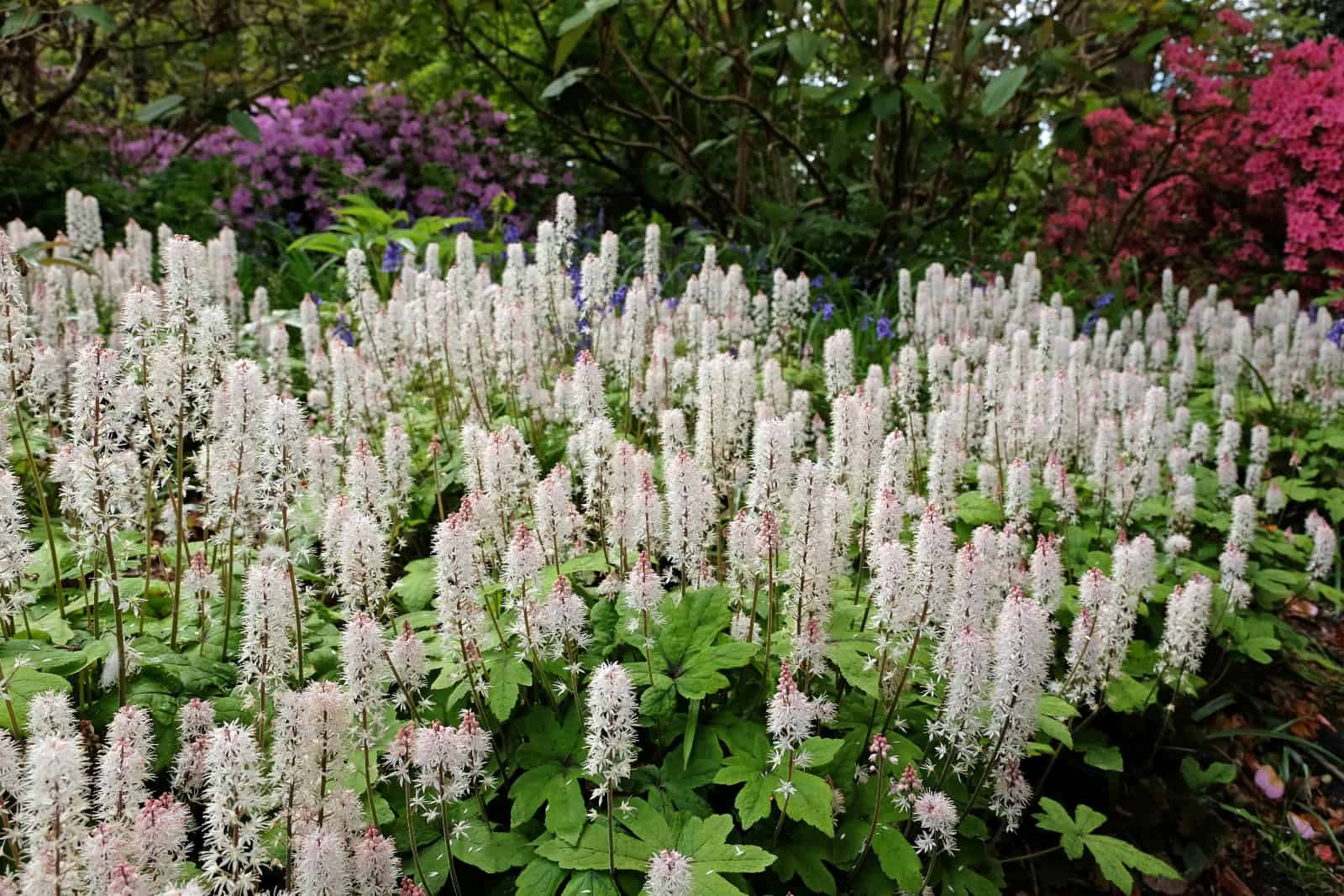
Foamflower brightens shaded garden areas with frothy spikes of white or pink flowers and heart-shaped, deeply lobed leaves. This shade-loving perennial thrives under larger trees in moist, humus-rich soil. Foamflowers bloom in spring, showcasing their beauty for four to six weeks. After the flowers fade, the attractive foliage continues to enhance your garden.
Advertisement
Lungwort

Lungwort flourishes in low-light conditions, which makes it an essential addition to any shaded garden space. Its decorative leaves, often spotted or splashed with white, look stunning all season and create a beautiful backdrop for its pink, white, or blue flowers. These flowers change color as they mature, adding an enchanting dynamic to shaded areas.
Bleeding Heart

Bleeding Heart is famous for its heart-shaped blooms in shades of pink and white. These delicate flowers dangle elegantly from long, arching stems. It requires moist, humus-rich, and well-draining soil to flourish, making it ideal for shade gardens or woodland landscapes.
Yellow Waxbells
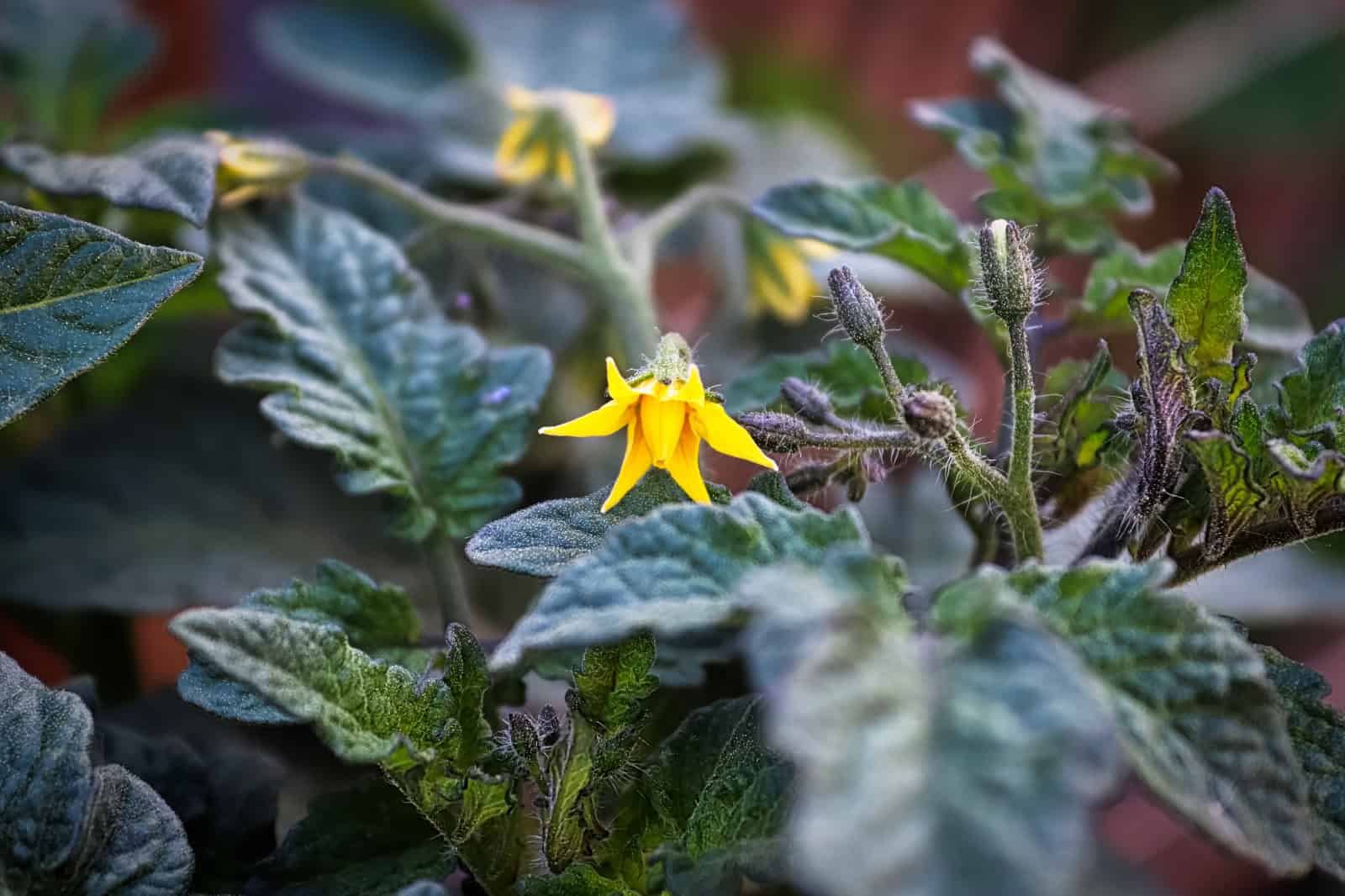
Yellow Waxbells offer a unique look to your garden with their waxy, bell-shaped yellow flowers that bloom in late summer and early fall. This lesser-known perennial is perfect for shady gardens, adding a burst of color when many other plants begin to fade. Its large, maple-like leaves provide a lush, tropical feel. Yellow Waxbells thrive in moist, well-drained soil rich in organic matter and prefer partial to full shade.
Japanese Painted Fern
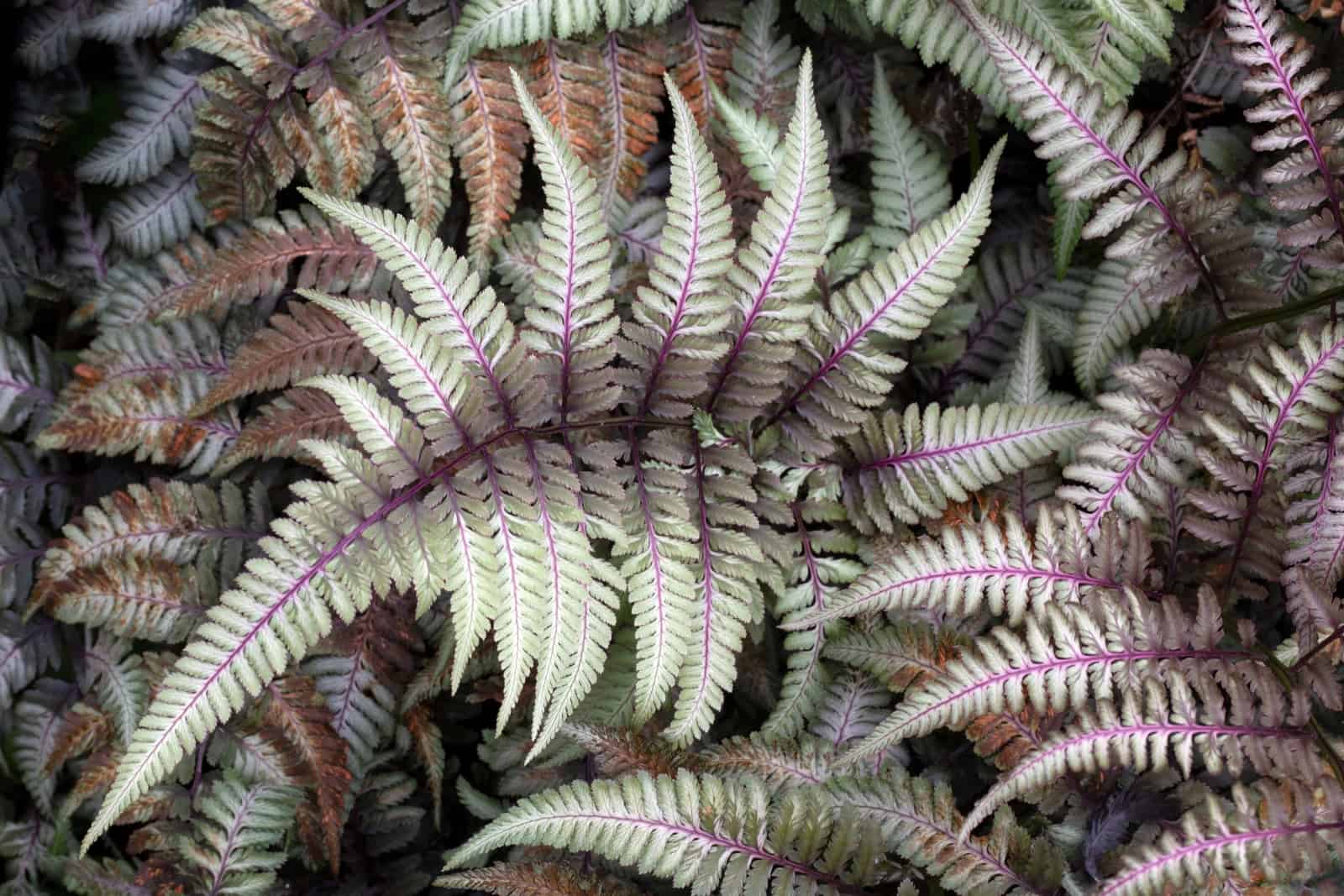
The Japanese Painted Fern is a shade garden gem, boasting fronds speckled with silver, burgundy, and green. This low-growing, slow-spreading fern thrives in shade and evenly moist, well-drained soil. It is native to Japan, Korea, and China and can grow 18 inches tall. Its unique foliage provides a unique texture and color contrast, making it ideal for shaded areas in gardens.
Fringecup
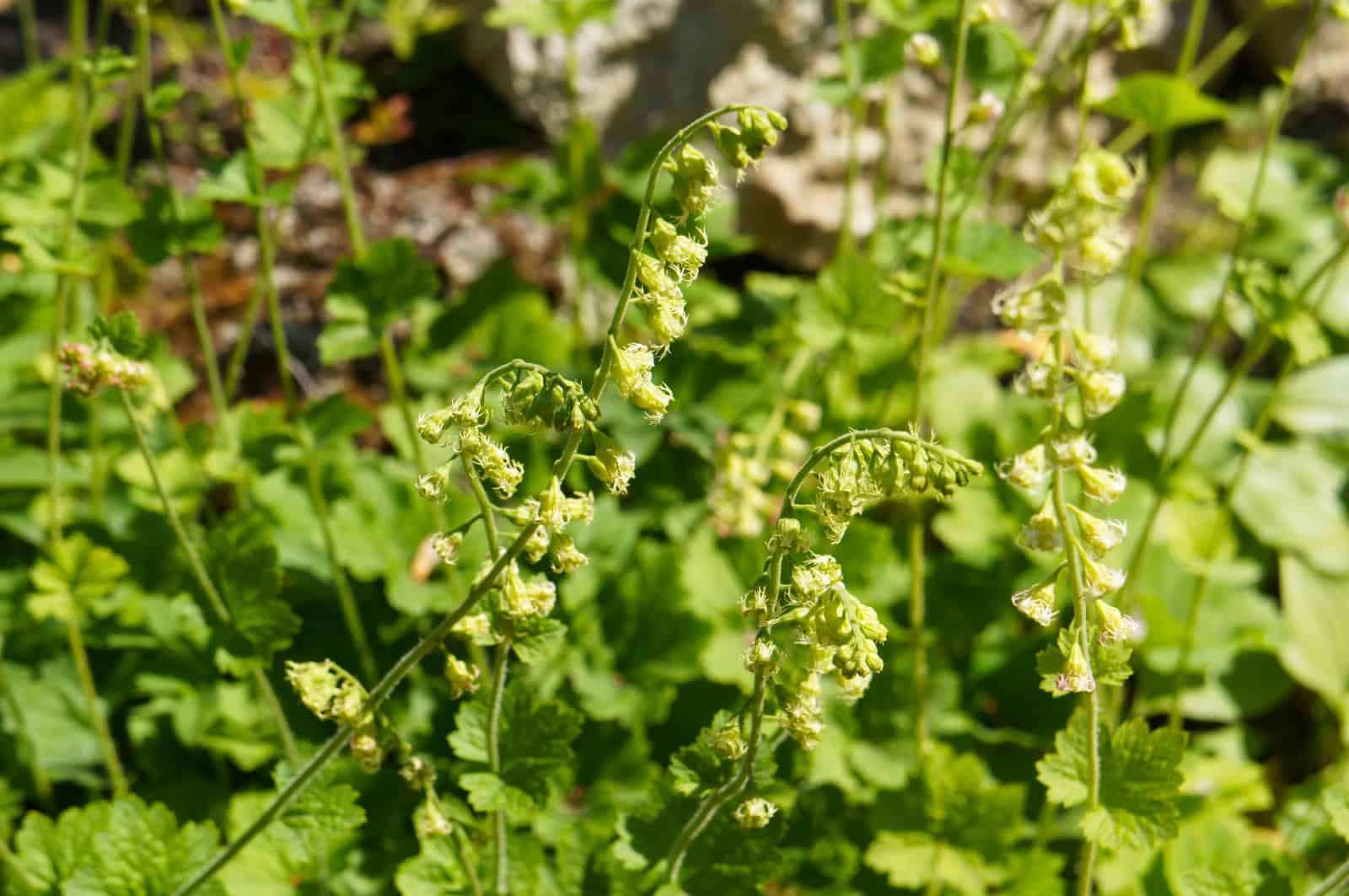
Fringecup brings a unique charm to shaded garden areas. Its loose spikes of small, bell-shaped purple or pink blooms flower from late spring to early summer, providing a delightful splash of color when many other plants are fading. The attractive, mounded foliage adds texture and depth to the garden, making fringecup an excellent choice for woodland gardens or shaded borders.
Heuchera

Heuchera, also known as Coral Bells, adds color to any shaded garden with its ruffled foliage in shades of purple, silver, or green. While its tiny bell-shaped summer flowers are lovely, the bold, evergreen leaves are the real showstoppers. This shade-loving perennial is a hit with bees and hummingbirds alike. Growing 12-18 inches tall and wide, Heuchera prefers shade and moist, well-drained soil.
Hosta
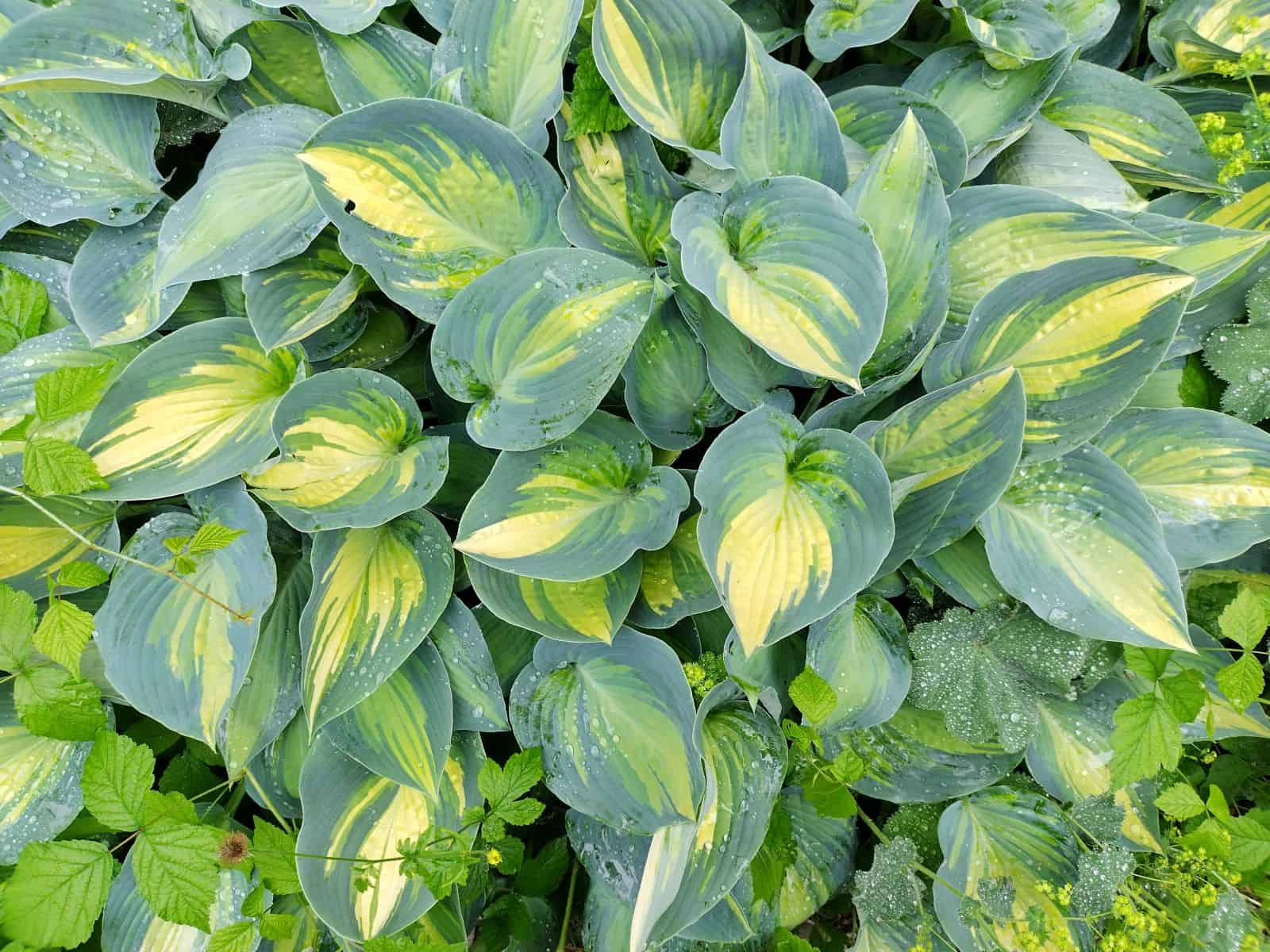
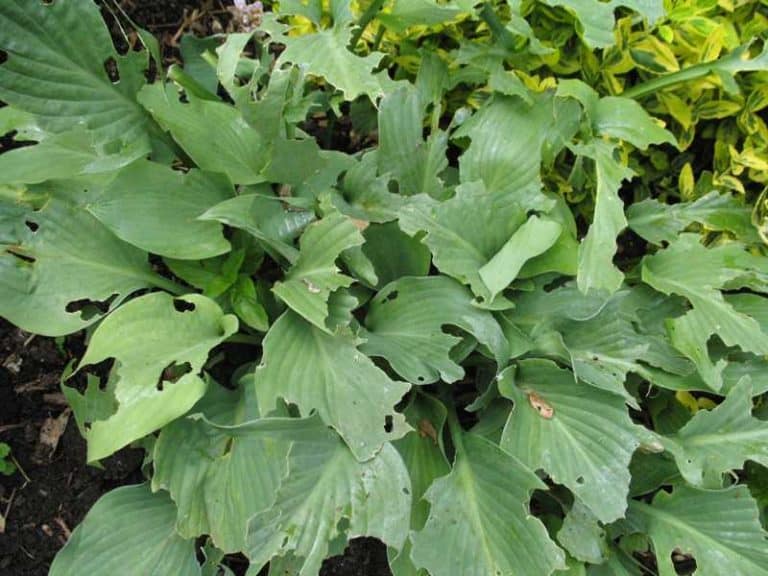
Perfect for filling shady corners, hostas bring a lush, vibrant look to any garden. These low-maintenance perennials boast gorgeous, patterned green, yellow, and white leaves. With over 6,000 varieties, some hostas are as small as 2 inches, while others can reach up to 4 feet tall. These hardy plants thrive in moist, fertile soil and require regular watering.
Caladium
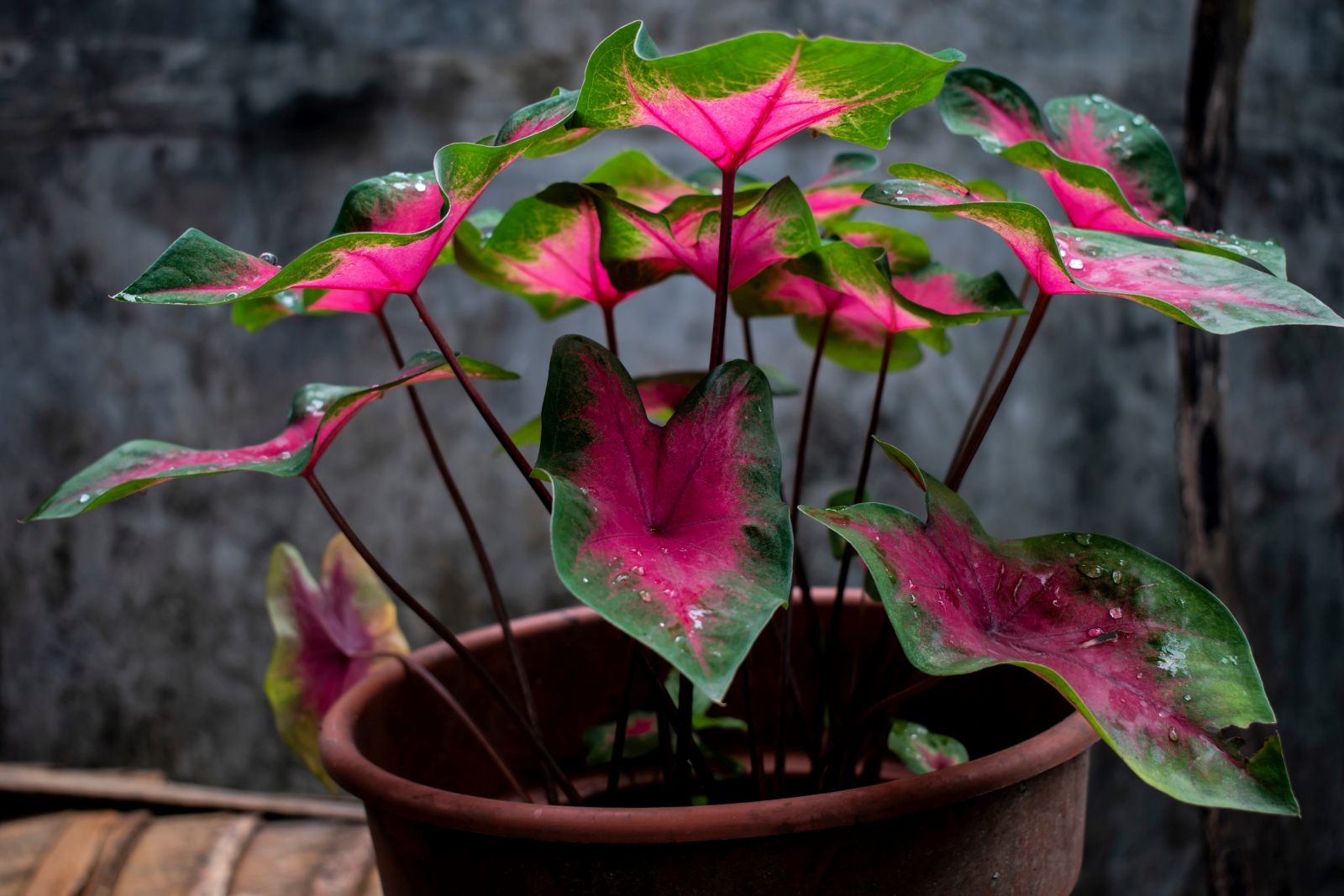
Caladiums have vibrant, heart-shaped leaves in stunning shades of green, red, pink, and white. These tropical plants thrive in warm, moist, well-drained soil, perfect for adding drama to shady garden spots. While they rarely flower, their striking foliage provides a vibrant pop of color, especially in darker areas where other plants struggle.
Astilbe

Astilbe is excellent for adding color to shadier areas of your garden. Its shiny foliage provides interest from early spring until late fall, while the beautiful clusters of red, white, or pink blooms bring intense color to flowerbeds. Astilbe thrives in partial shade and grows best in beds shaded from the hot afternoon sun. Be cautious with placement; its fern-like foliage can scar and burn in direct, mid-day sun.
Lamium
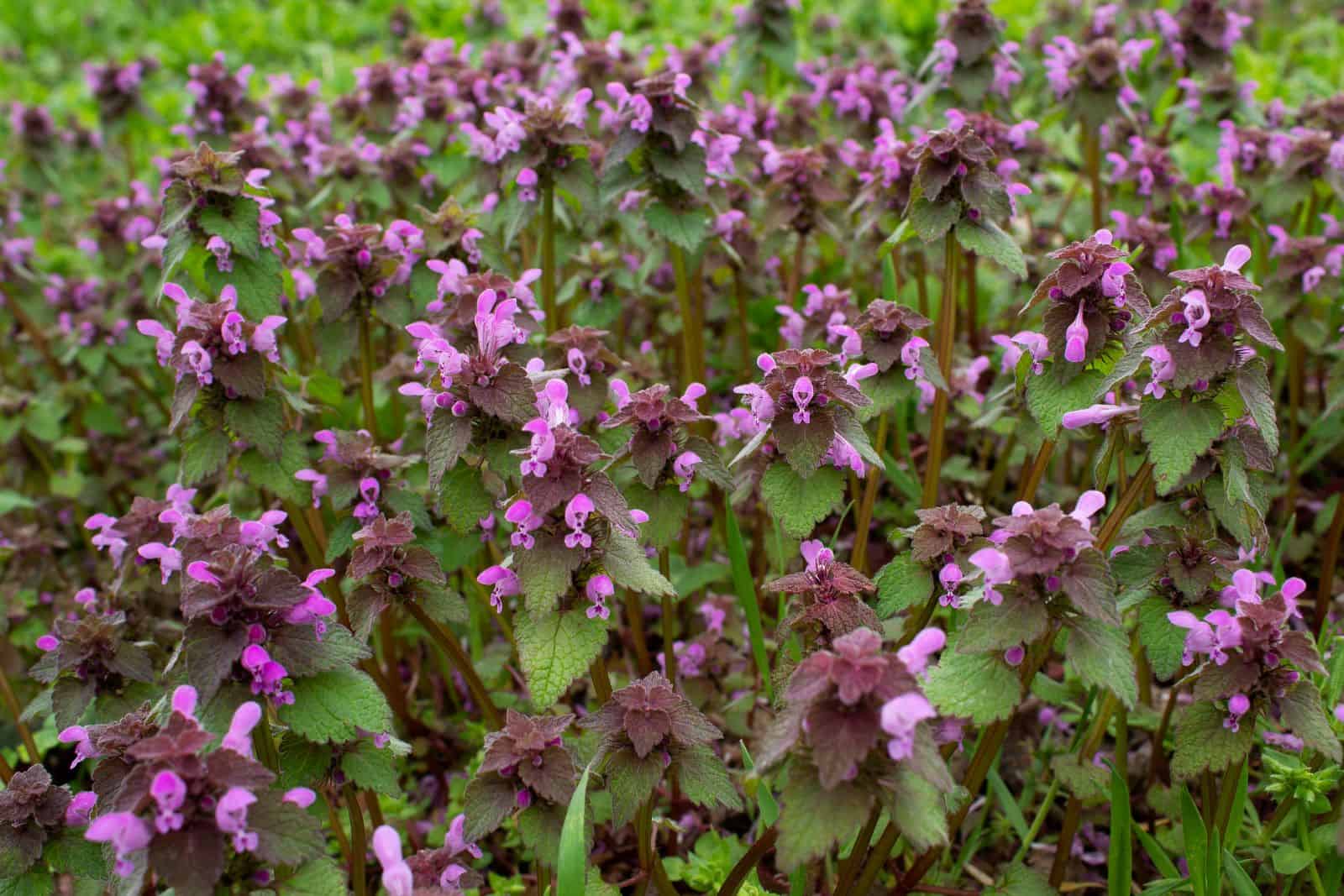
Lamium can be an attractive ground cover in your shade garden. Its silvery, variegated foliage and colorful yellow, pink, white, or purple blooms add beauty to your garden. This member of the mint family is beloved for its compact form and ease of care. It thrives in partial to full shade, producing small clusters of flowers from spring through late summer. While it can tolerate some sunlight, too much direct sun can scorch its leaves.
Brunnera
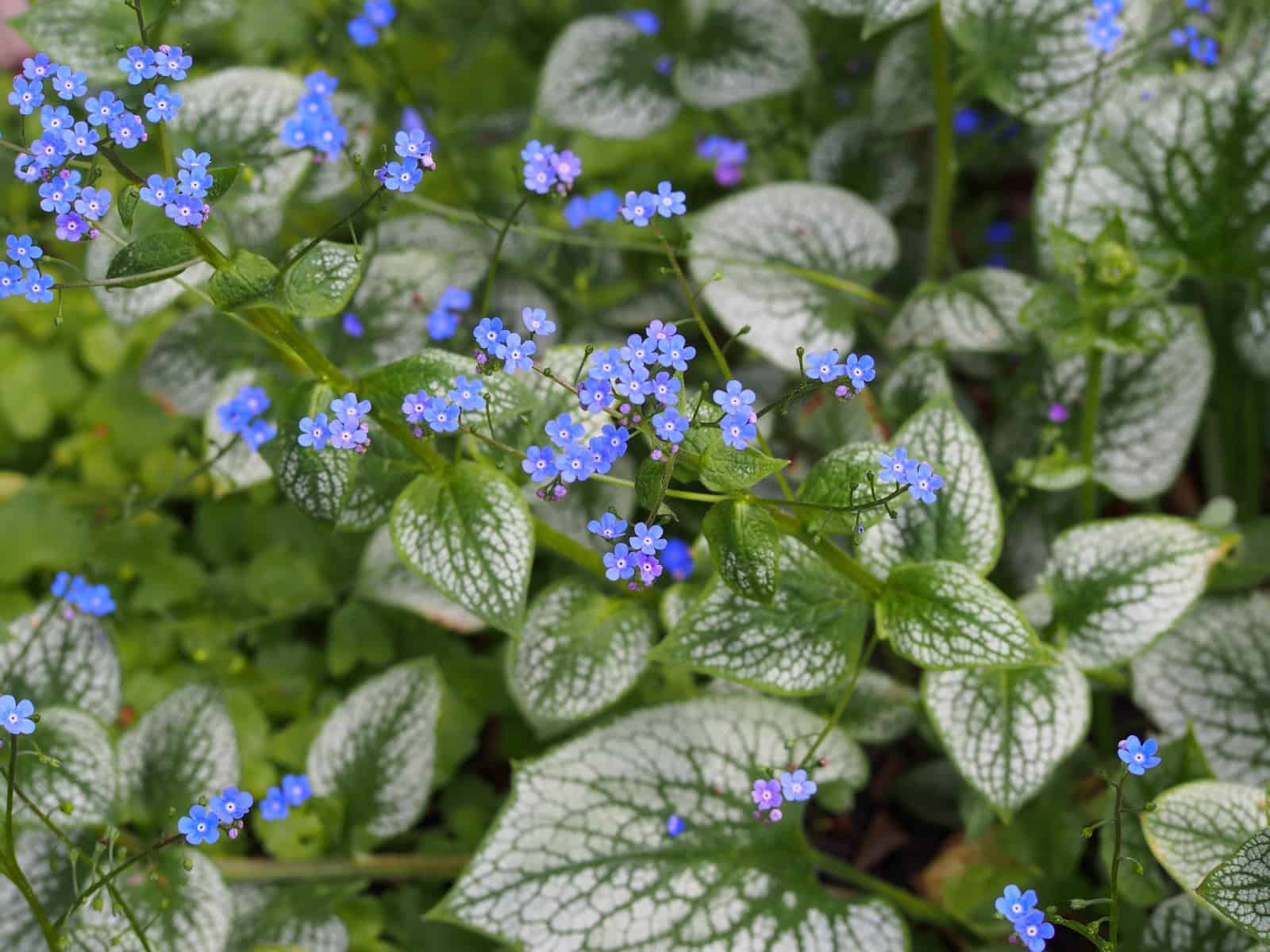
Brunnera can add beauty and tranquility to your garden with minimal maintenance. Its blue, forget-me-not-like flowers bloom in early spring, while its heart-shaped, often silvery-patterned leaves add long-lasting interest. Native to Eurasia, Brunnera thrives in shady garden spots, making it perfect for underplanting in woodland gardens, along pathways, or as ground cover in shaded borders.
Virginia Bluebells

Virginia Bluebells bring early spring color with their vibrant clusters of blue flowers. They can form dense colonies, ideal for shady areas, offering a lovely burst of color when most other plants are still waking up from winter. These perennials have rounded, smooth leaves ranging from grey-green to blue-green. They are native to the United States and grow best under the shade of trees, disappearing when the summer heat sets in.
Corydalis
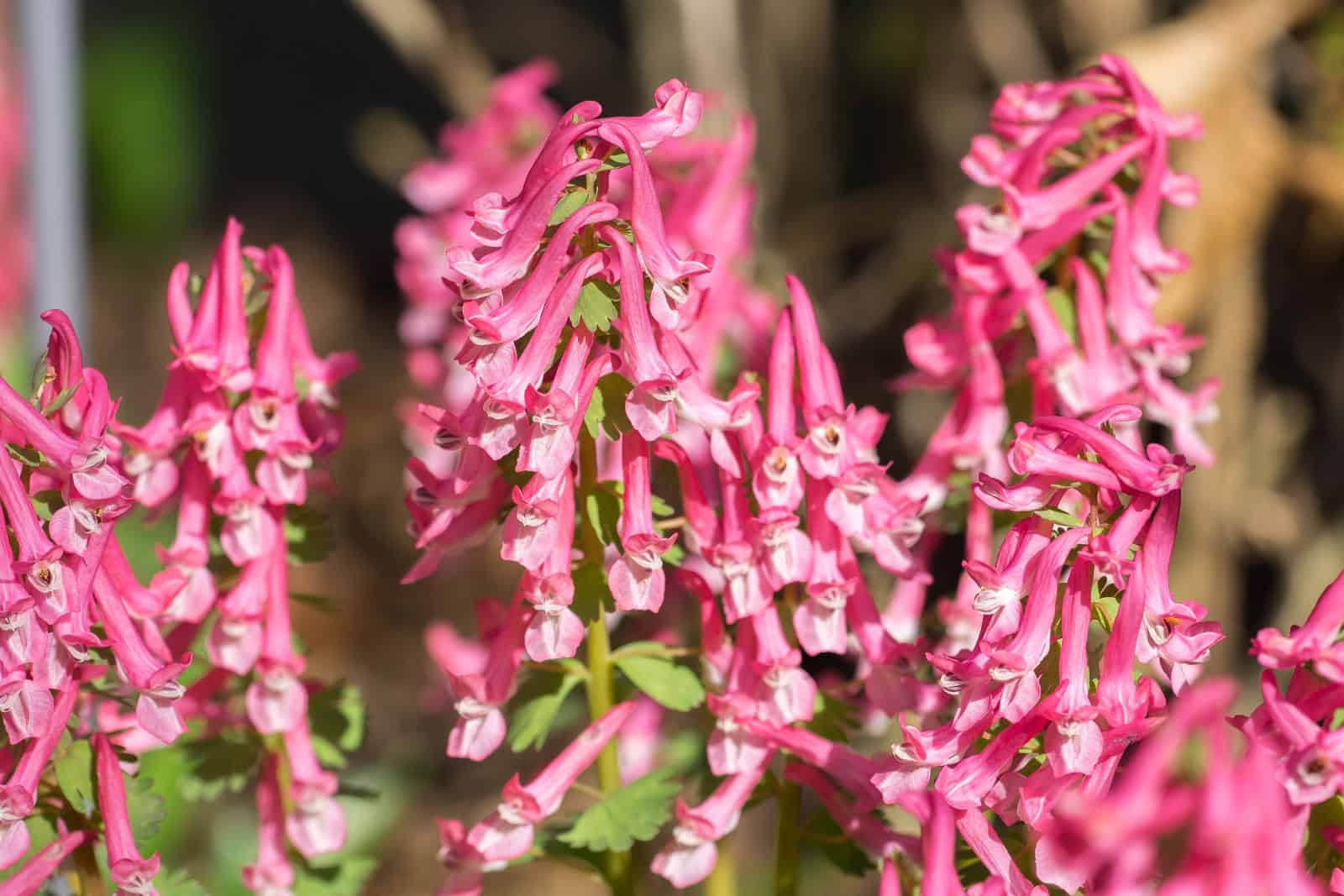
Corydalis is a shade-loving perennial perfect for adding flair to your garden. Its fern-like leaves and yellow, blue, or pink tubular flowers bring color and texture from spring to summer. There are over 400 species in the poppy family, but blue Corydalis stands out with its soft blue-green flowers and delicate leaves. Native to North America’s woodland areas, Corydalis loves sun-dappled shade and moist, well-drained soil. It’s an excellent pick for woodland gardens, stream banks, and shaded spots, where it adds a soft, airy look to your garden.
Ajuga
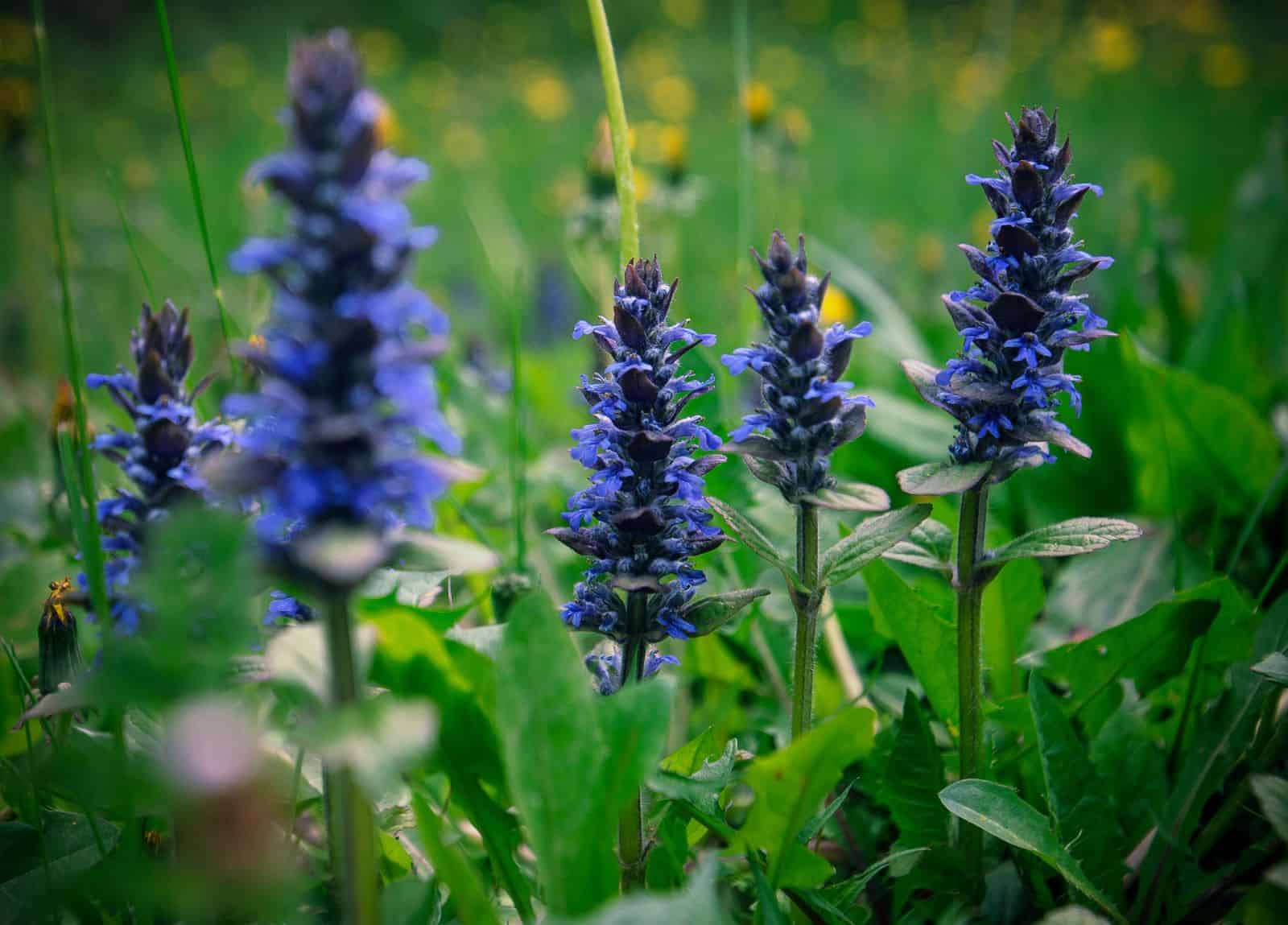
Ajuga, or bugleweed, is a fast-spreading ground cover that thrives in shady areas. Its deep green leaves form a dense mat, adding vibrant spikes of blue, purple, pink, or white flowers in the spring. With foliage colors ranging from rich burgundy to cream and pink edges, ajuga brings color and texture to the garden. It’s perfect for filling bare spots with minimal effort.