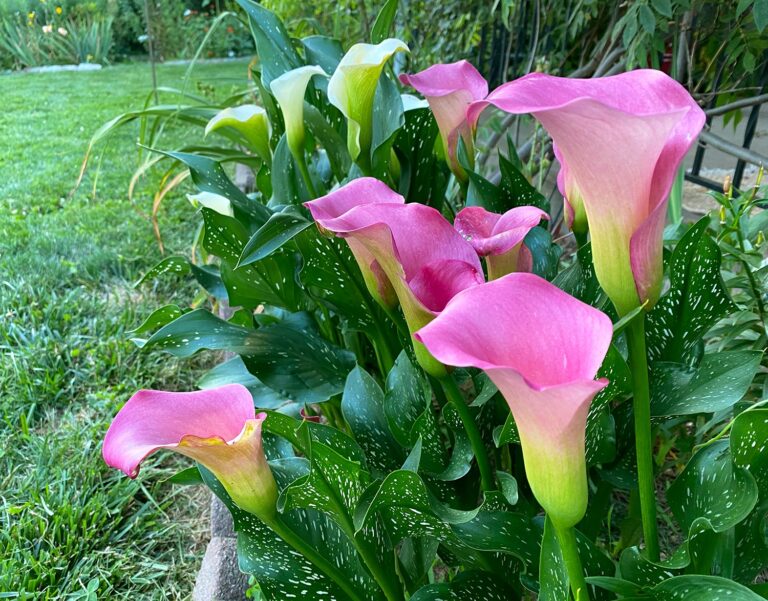
Pink perennial flowers can be a wonderful addition to any garden. They provide consistent color and charm to your home as they return year after year. Whether your garden has lots of sun or shade, there is a pink perennial that will suit your space. In this article, we’ll look at 12 pink perennials that can enhance your garden.
Foxglove

Foxglove is a tall, elegant plant with vibrant pink tubular flowers. It blooms from late spring to mid-summer and prefers moderate to full shade. Deadheading spent flowers can extend this blooming period. These flowers attract pollinators like hummingbirds and bees. However, this plant contains toxic compounds which are poisonous to humans, pets, and livestock.
Advertisement
Aster

Asters are perfect for sunny garden spots, adding late-season color from late summer to early fall. These hardy perennials thrive in full to partial sun and are well-suited for zones 3-8. Asters have over 170 species ranging from purple to white, but light pink is the most common variety. These flowers attract bees and butterflies, which enhances your garden’s ecological value. Asters are perfect for new gardeners seeking vibrant, easy-to-care-for additions to their gardens.
Peony

Gardeners love Peonies for their gorgeous blooms and lush foliage. They are available in shades of pink, ranging from soft pastels to deep magenta. They bloom from late spring to early summer, typically from April to June. Peonies prefer full sun in the morning and light shade during hot afternoons. With their stunning appearance and exquisite fragrance, peonies are a must-have for any pink perennial garden.
Creeping Phlox
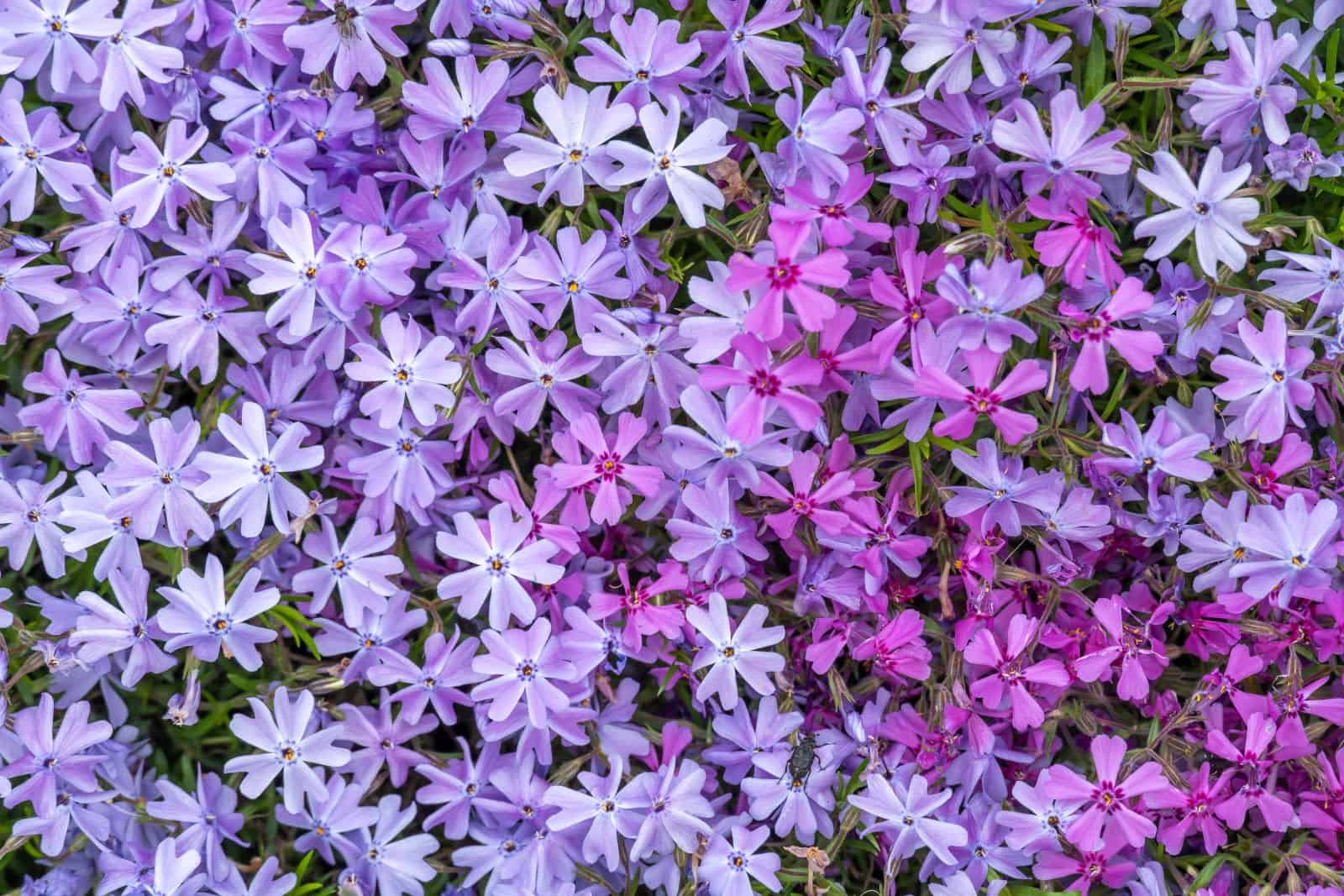
Creeping Phlox is famous for its ability to suppress weeds. It forms a dense mat of delicate pink flowers that bloom profusely in mid-to-late spring. This plant is ideal for perennial borders, rock gardens, and pots, providing a soft, walkable carpet that attracts pollinators. Creeping Phlox grows well in full sun and partial shade with nutrient-rich, well-draining soil. Its shallow roots allow it to thrive in various soil conditions, including clay and sand.
Snapdragon

With their tall spikes of snap-like flowers, Snapdragons add a delightful touch to garden beds and containers. The popular ‘Pretty in Pink’ variety features rich pink flowers that bloom abundantly in full or partial sun from June to October. Snapdragons thrive in rock gardens with minimal care. They can be planted as borders or focal points, adding color to your garden year after year.
Bleeding Heart

Bleeding Hearts are known for their delicate, heart-shaped pink flowers that dangle from arching stems. These flowers grow well in partial to full shade and prefer moist, rich soil, typically found in forest environments. They blossom from spring to early summer, adding a touch of romance to gardens. Bleeding Hearts are hardy and can survive winters, making them a long-lasting addition to shade gardens. They attract pollinators like bees, hummingbirds, and butterflies.
Chrysanthemum
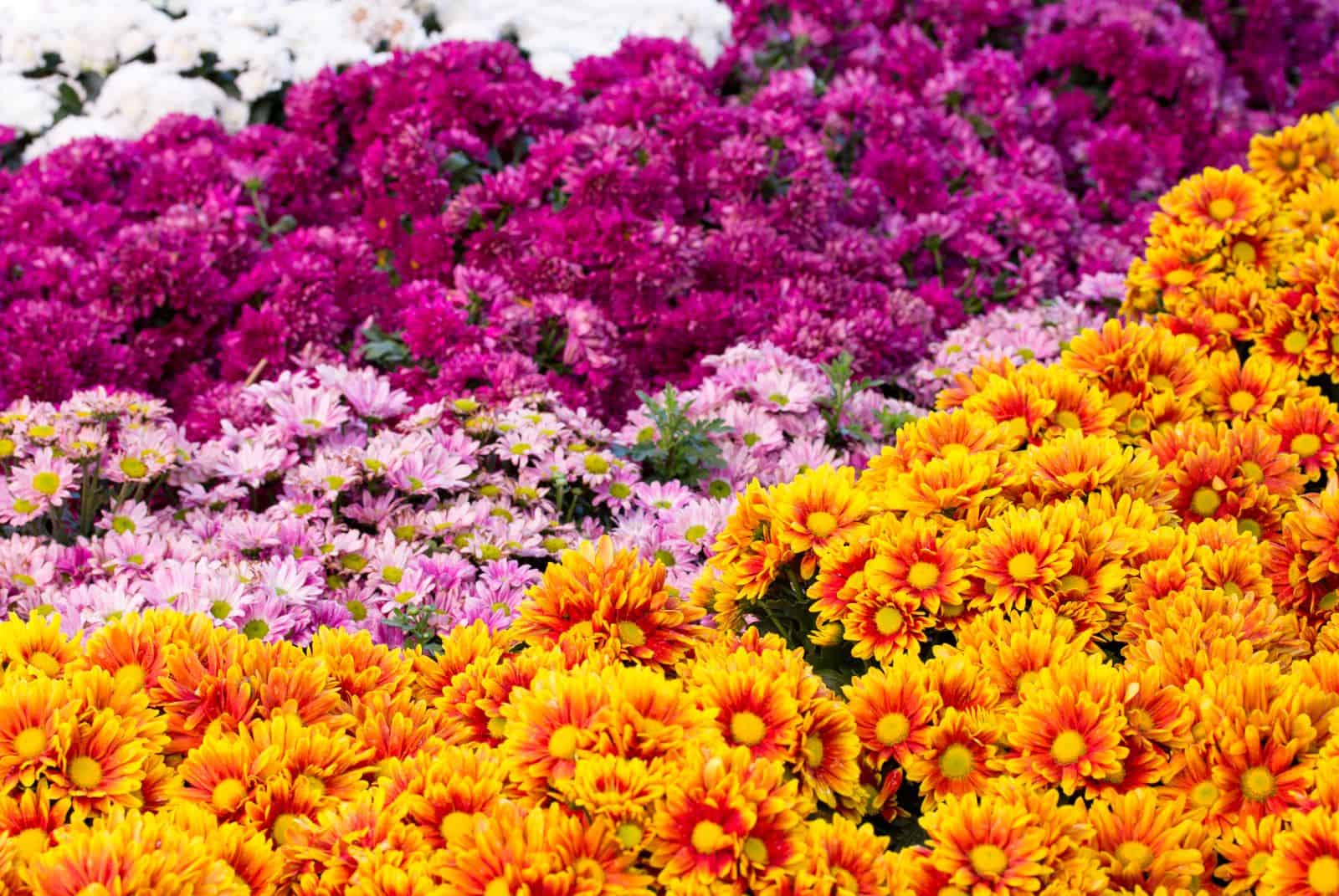
Chrysanthemums are popular perennials native to China. They require full sun to partial shade. With their wide range of colors, including shades of pink, chrysanthemums bloom from late summer to fall, providing a vibrant display from September to November. Hardy and easy to grow, they attract pollinators. You can grow them in flower beds, container gardens, mass plantings, and vertical displays. Mums can also help repel lizards, making them a practical addition to any garden.
Coral Bells

Coral Bells are hardy perennials known for their diverse foliage colors ranging from black to green to purple. In addition to their colorful leaves, coral bells produce delicate pink flowers on tall, slender stems during spring and summer. These resilient plants can survive in various soil conditions and are drought-tolerant, which makes them ideal for low-maintenance gardens. Coral bells are particularly suited for shady areas. The ‘Weston Pink’ cultivar is especially prized for its bright pink blossoms and long blooming season.
Lupine

Lupines are easy-to-care perennials that feature tall spikes of tightly packed flowers in pink, red, blue, white, and purple hues. These tough plants are often seen growing along roadways and in ditches. Lupines prefer full sun but can also tolerate partial shade and need well-draining soil to flourish. Lupines bloom from late spring to early summer and provide vertical interest to garden beds. These resilient plants are perfect for beginners, providing vibrant color and minimal care needs.
Rodgersia
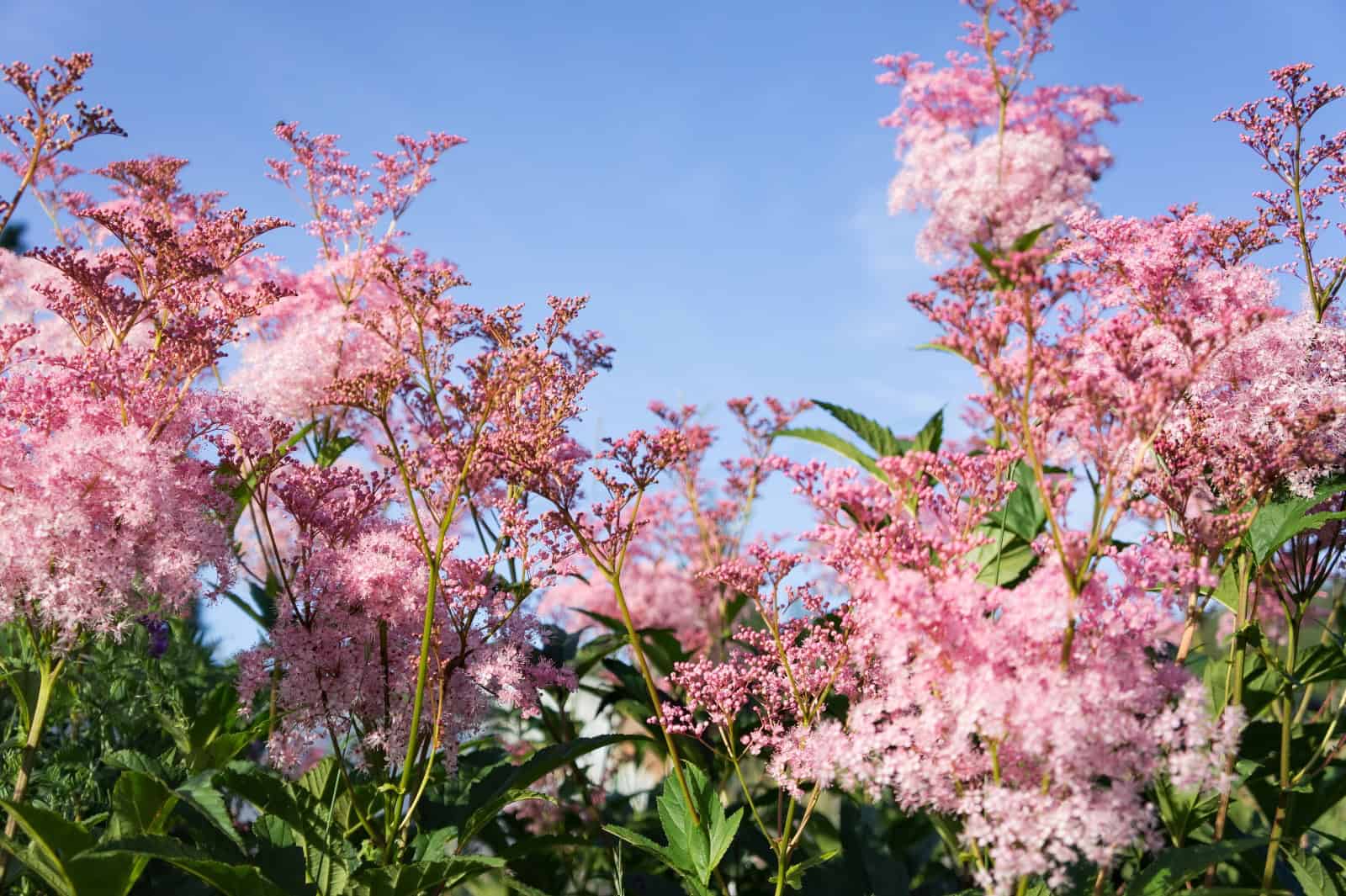
Rodgersia boasts large, creamy pink blossoms and rich, dark green foliage. It is particularly suited for wet areas near ponds or wooded locations. This plant features impressive palmate leaves and towering spikes of white, creamy white, and pink flowers that flourish during spring and summer, making it an excellent choice for shade gardens. These hardy perennials are also forgiving and easy for beginners to care for, but be mindful of snail damage to their leaves.
Astilbe

Astilbe can grow up to five feet tall, adding height and color to gardens. Astilbes are known for their feathery plumes of flowers in hues of pink, red, purple, or white, which bloom from late spring to early summer. These plants grow well in full sun to full shade and are perfect for adding texture and color to shady areas. Their feathery plumed blossoms that look good both in season and when dried for winter interest
Hardy Hibiscus
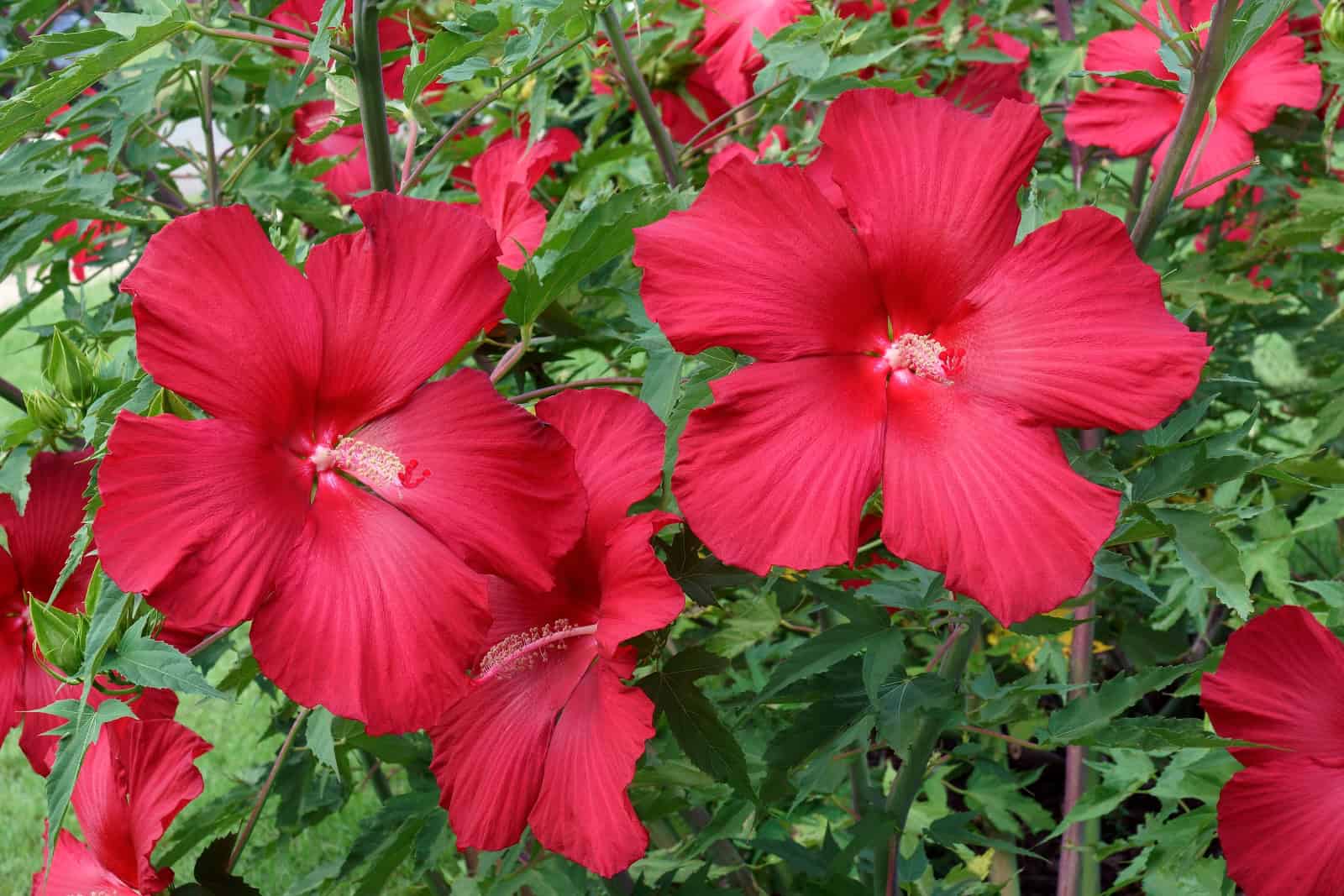
Hardy Hibiscus is a large shrub that thrives in tropical and temperate gardens. It produces stunning pink flowers with a tie-dyed appearance, blooming from the outer edges inward. This perennial is native to Southern North America and requires full sun to flourish. Even in colder regions, you can grow the hardy hibiscus successfully. Its big, colorful flowers make it stand out, blooming beautifully above other plants and improving the look of your garden.