You’re not alone if you dream of a lush and beautiful garden without constant weeding. The right plants can create a barrier against weeds while inviting pollinators to make themselves home. With some planning, you can even have an easily maintained garden full of moving life, teeming with good bugs. Here’s how to grow a haven for pollinators—and a nightmare for weeds.
Ground Covers
Ground cover plants are the best solution to prevent weeds from trespassing. They spread out fast, filling open soils where weeds gain a foothold. For example, creeping thyme is a dense mat of flowers that are low to the ground and attract bees. From an aesthetic perspective, ground covers can offer a natural weed-repelling barrier while providing color and texture.
Advertisement
Sedums
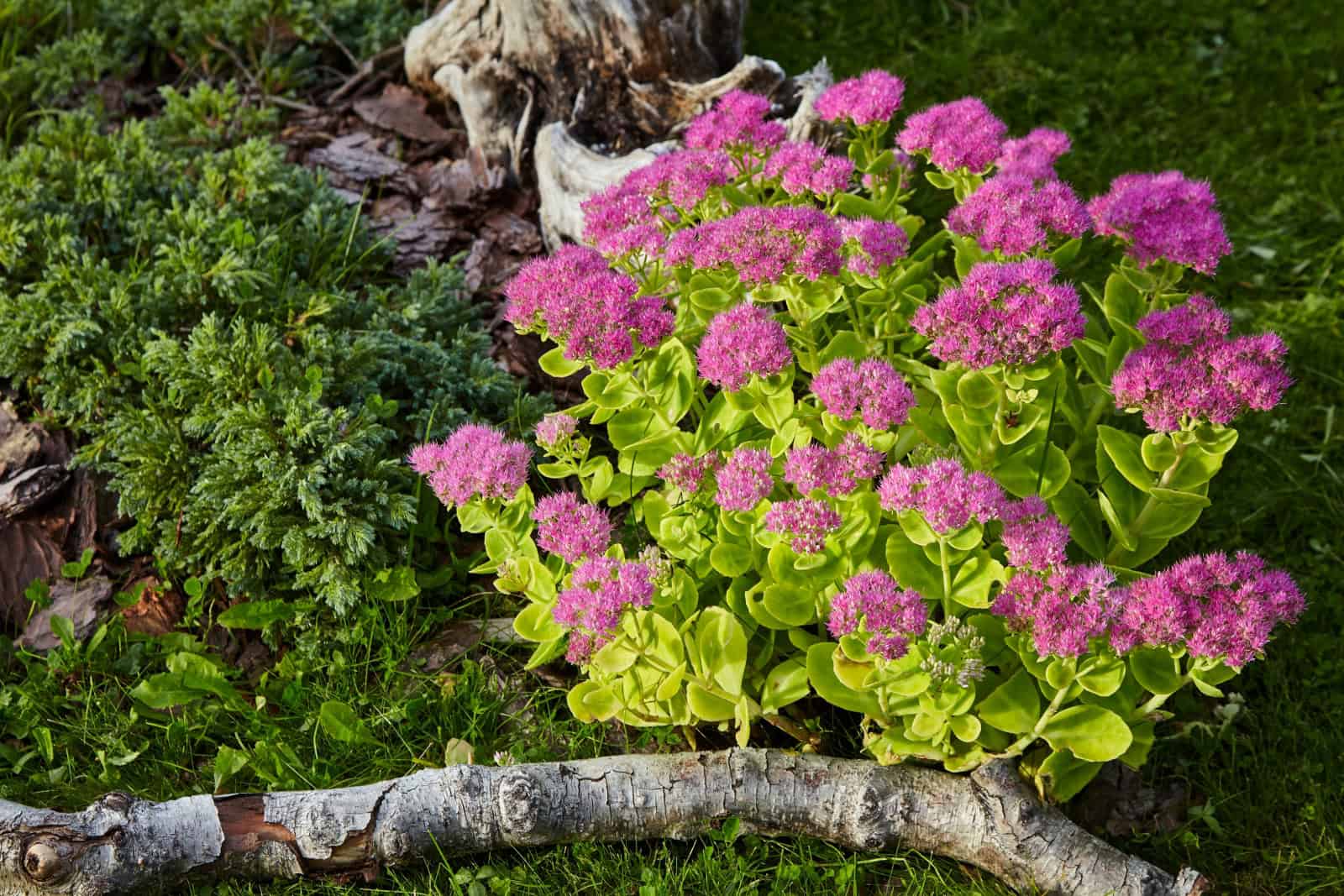
Sedums (Sedum spp.) are adaptable, drought-tolerant, and weed-resistant succulents. They are low-growing with plump, fleshy leaves that reach out over the bare ground. Thus, they make excellent mulches. Some species, like the famous Autumn Joy (Hylotelephium spectabile), produce flowers that attract bees and butterflies. They provide seasonal interest in your garden while keeping weeds out.
Lavender
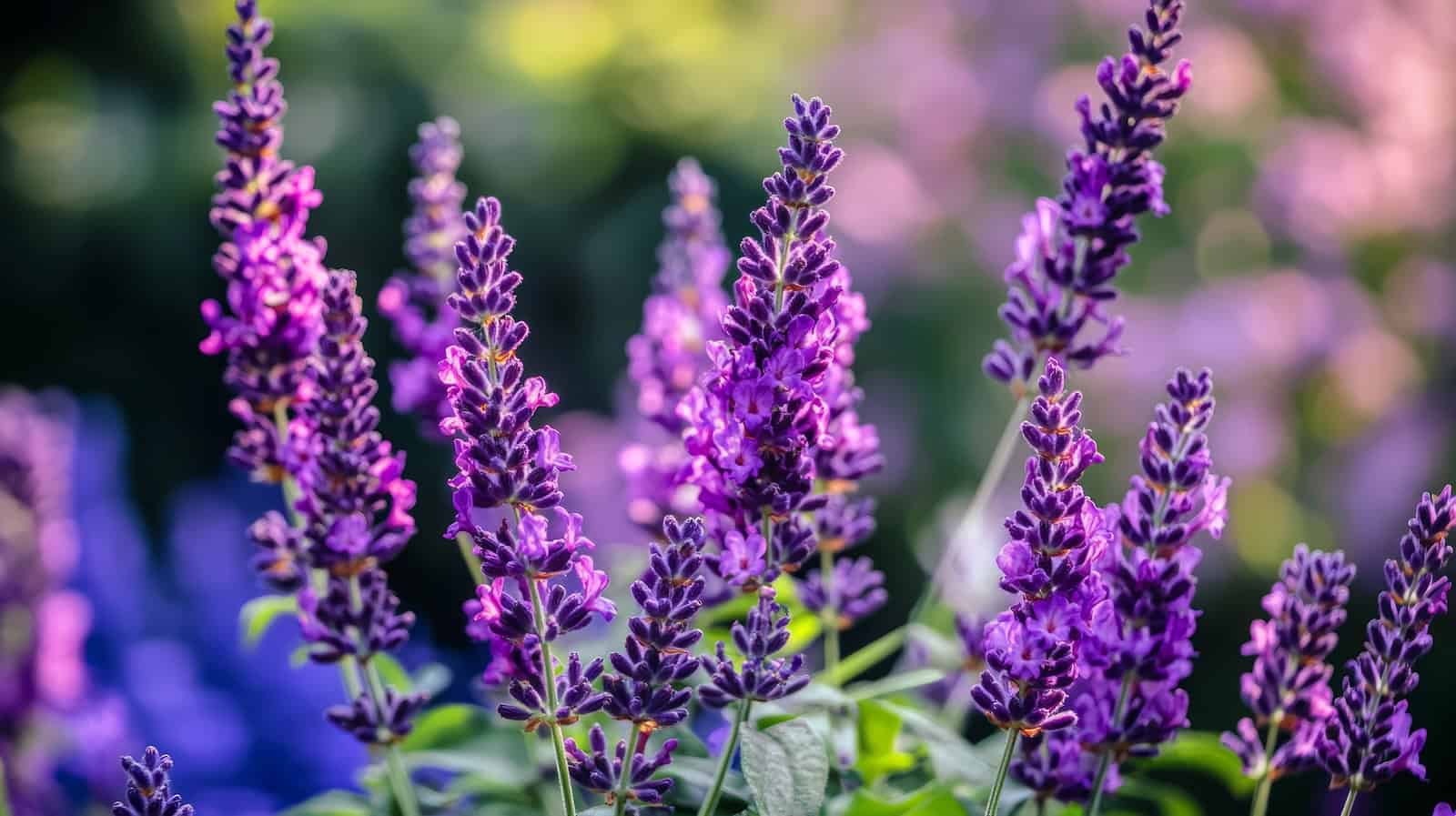
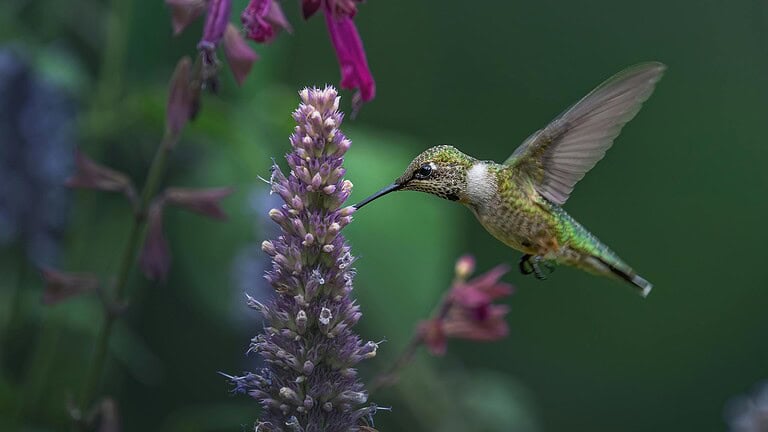
Lavender (Lavandula angustifolia) is a powerhouse for weed suppression and pollinator attraction. Its aromatic foliage naturally discourages many pests, and its shrub habit blocks weeds perfectly. Lavender flowers attract bees, butterflies, and even hummingbirds, providing a real sensory feast in the garden. Grow it in blocks for the most impact.
Yarrow

Yarrow (Achillea millefolium) spreads from a base with flat, cut-leaved foliage. This plant loves the warm sun and forms a natural weed barrier. Its flat clusters of blooms are a butterfly and bee magnet. Moreover, its feathery foliage forms a thick mat that stops weeds from sneaking through. This is a dry-tolerant and low-maintenance option, which makes it a good choice.
Vinca
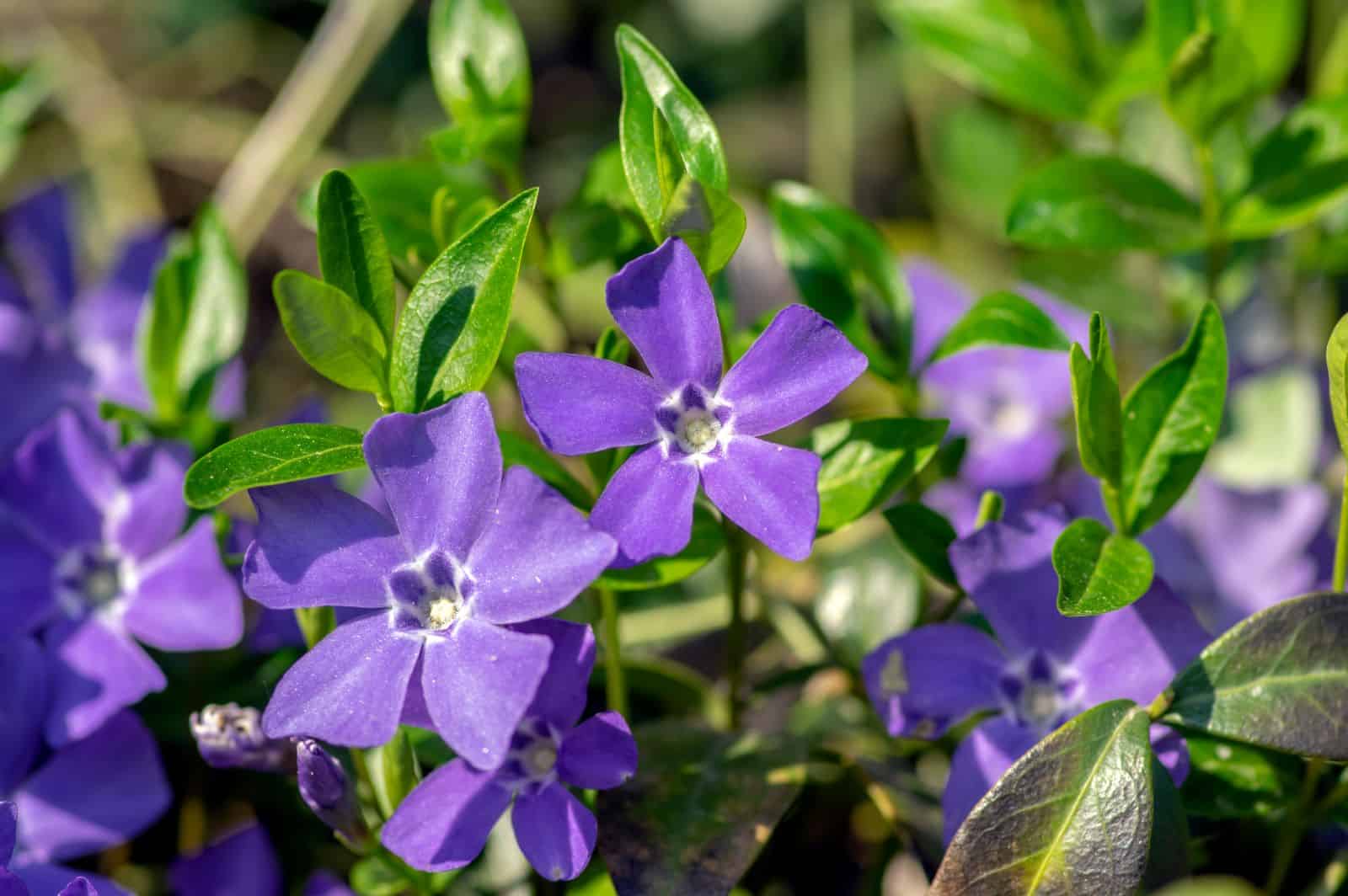
If you want to fill in areas of shade where weeds sprout more, vinca (Vinca minor), also called periwinkle, could be your ticket. This groundcover flower loves shady gardens and bears tiny, blue-purple flowers bees love. Vinca spreads readily and fills the ground, blocking sunlight and germinating weeds.
Bee Balm
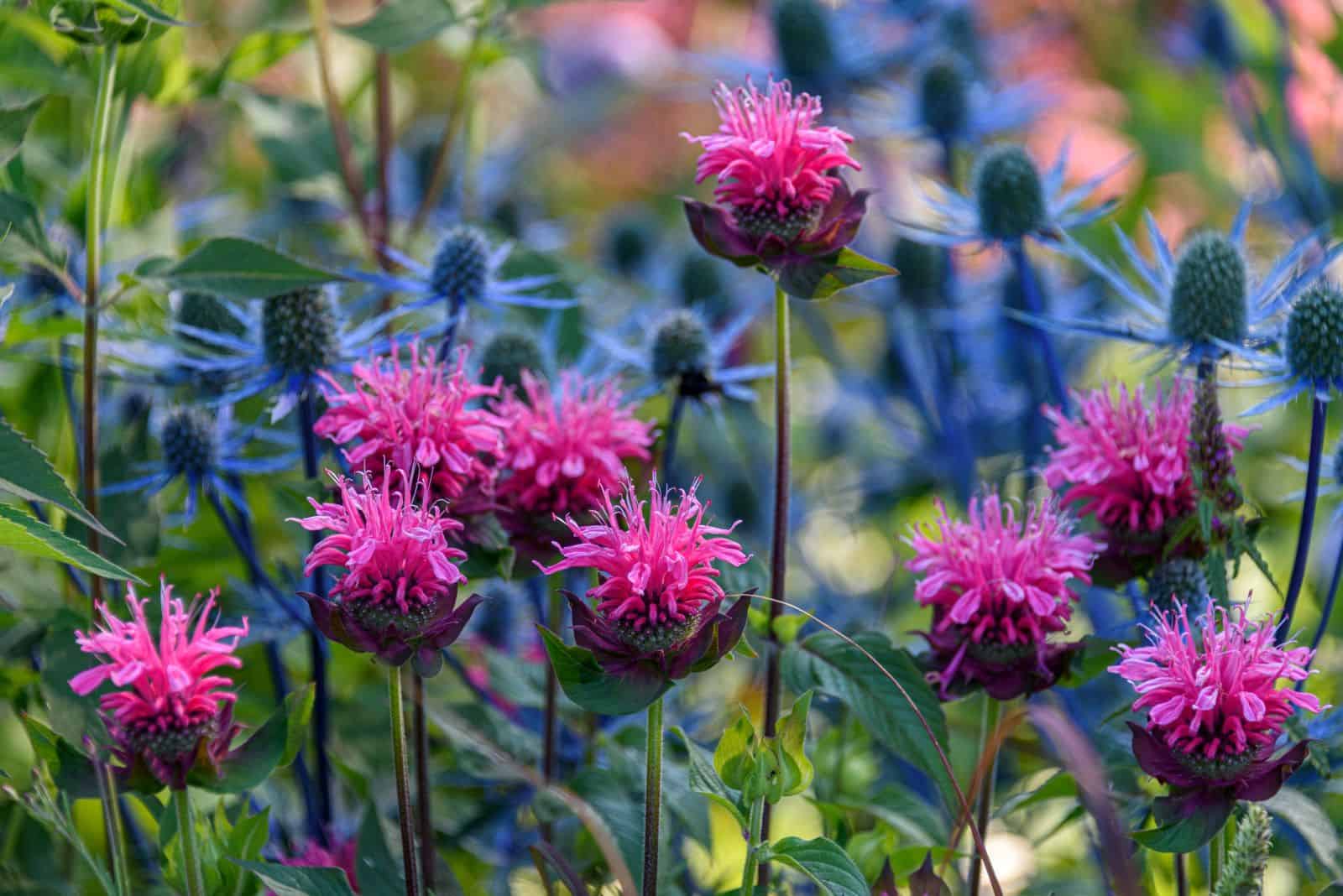
Many gardeners who need help preventing weeds rave about bee balm (Monarda didyma) or Monarda. It’s a favorite among bees and is excellent for crowding out weeds. It also produces dense clusters with lovely, tubular flowers that are particularly attractive to pollinators. Its fragrant leaves add an extra level of interest, making it a beautiful and functional addition to any garden.
Creeping Phlox

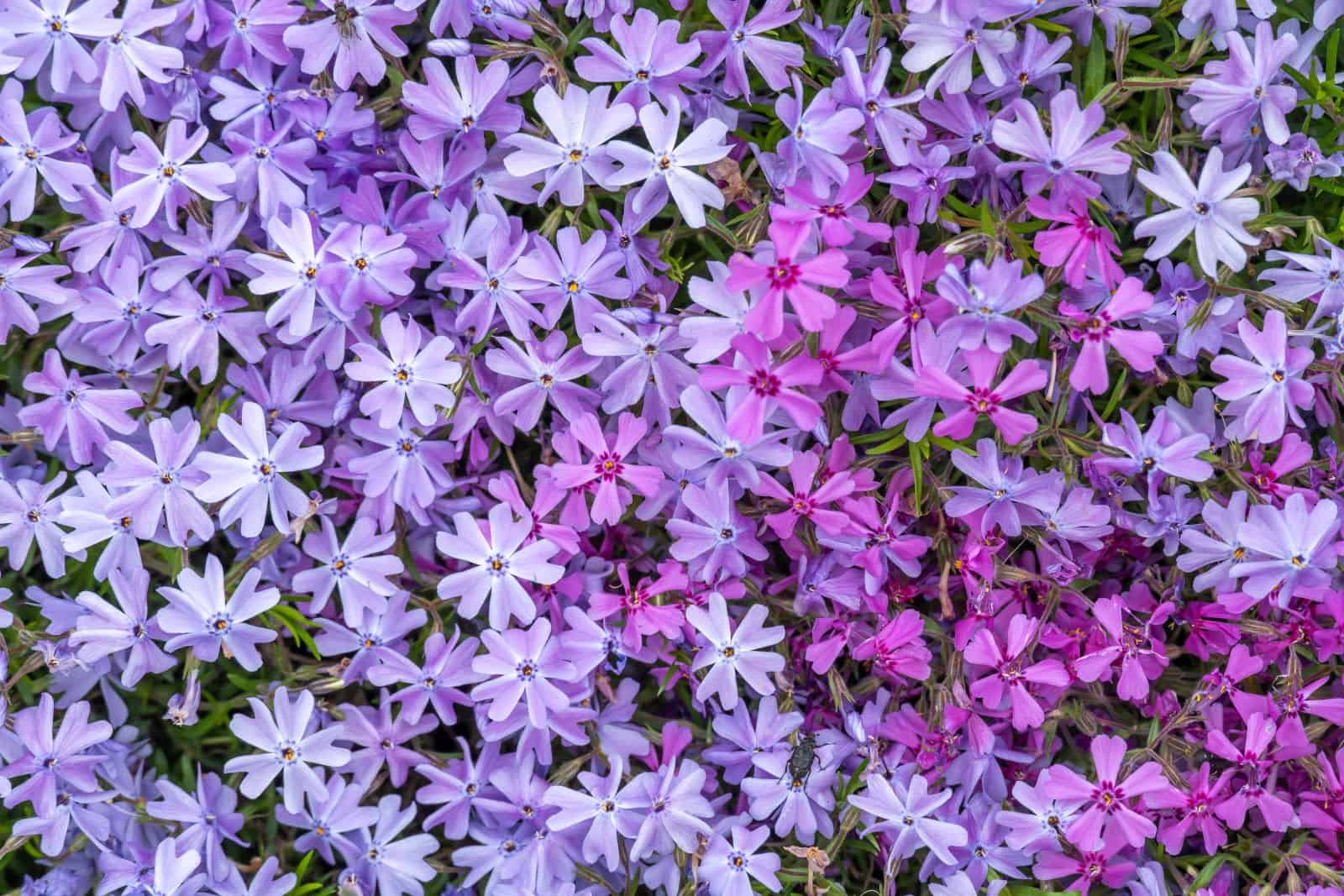
Creeping phlox (Phlox subulata) acts like a carpet and covers the soil with weeds during flowering time in many colors, such as pink, purple, and white. Thus, it covers large areas of ground and suppresses weeds. The blooms during spring flowerings also attract pollinators for a lively and expressive show.
Coneflowers

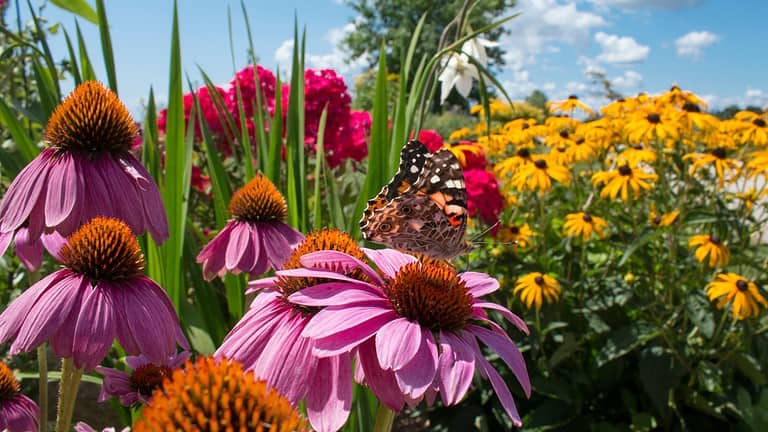
Coneflowers (Echinacea purpurea) add color and structure to your garden. Their big, bright blooms are irresistible to bees and butterflies, while broad, dense foliage helps keep weeds from growing. Coneflowers can tolerate drought and have long-lasting blooms, making them a practical choice for a pollinator-friendly garden.
Creeping Jenny
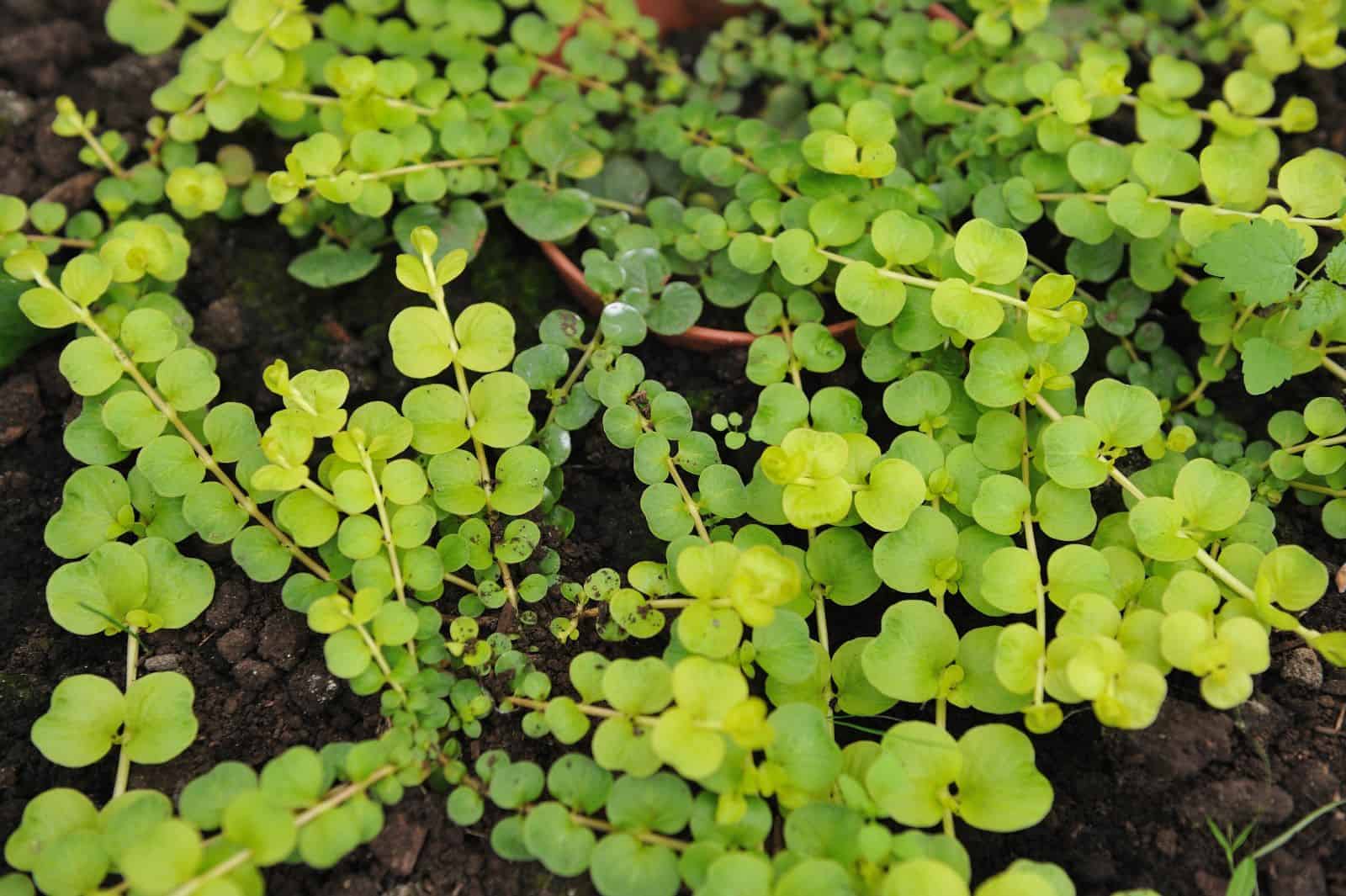
Creeping Jenny (Lysimachia nummularia) forms a thick, low-growing mat of yellow-green leaves. It blocks weeds and adds bright yellow flowers that attract bees and butterflies. This plant grows quickly and thrives in sunny to partially shaded areas. However, it can become invasive in some U.S. regions. To control its spread, plant it in containers or use edging. Trim back runners regularly to keep it in check.
Black-eyed Susans

Black-eyed Susans (Rudbeckia hirta) attract butterflies and bees with bright yellow petals. They grow in clumps, making them an excellent natural weed barrier. These hardy perennials withstand drought and return year after year, making them apt for a low-maintenance, color-filled, pollinator-filled, weed-free garden.
Russian Sage

The tall, wispy Russian sage (Perovskia atriplicifolia) features silvery stems. Its fragrant foliage is a natural weed suppressor because of its dense growth habit. Russian sage also attracts bees and butterflies, providing nectar while controlling weeds.
Coral Bells

With coral bells (Heuchera spp.), you receive colorful, scalloped-edged leaves from a perennial that thrives in shade. Leaves of these plants shade out weeds so well that you don’t see them. Delicate flower spikes add splashes of color and pollinator activity to shaded areas of your garden by attracting bees and hummingbirds.
Golden Alyssum
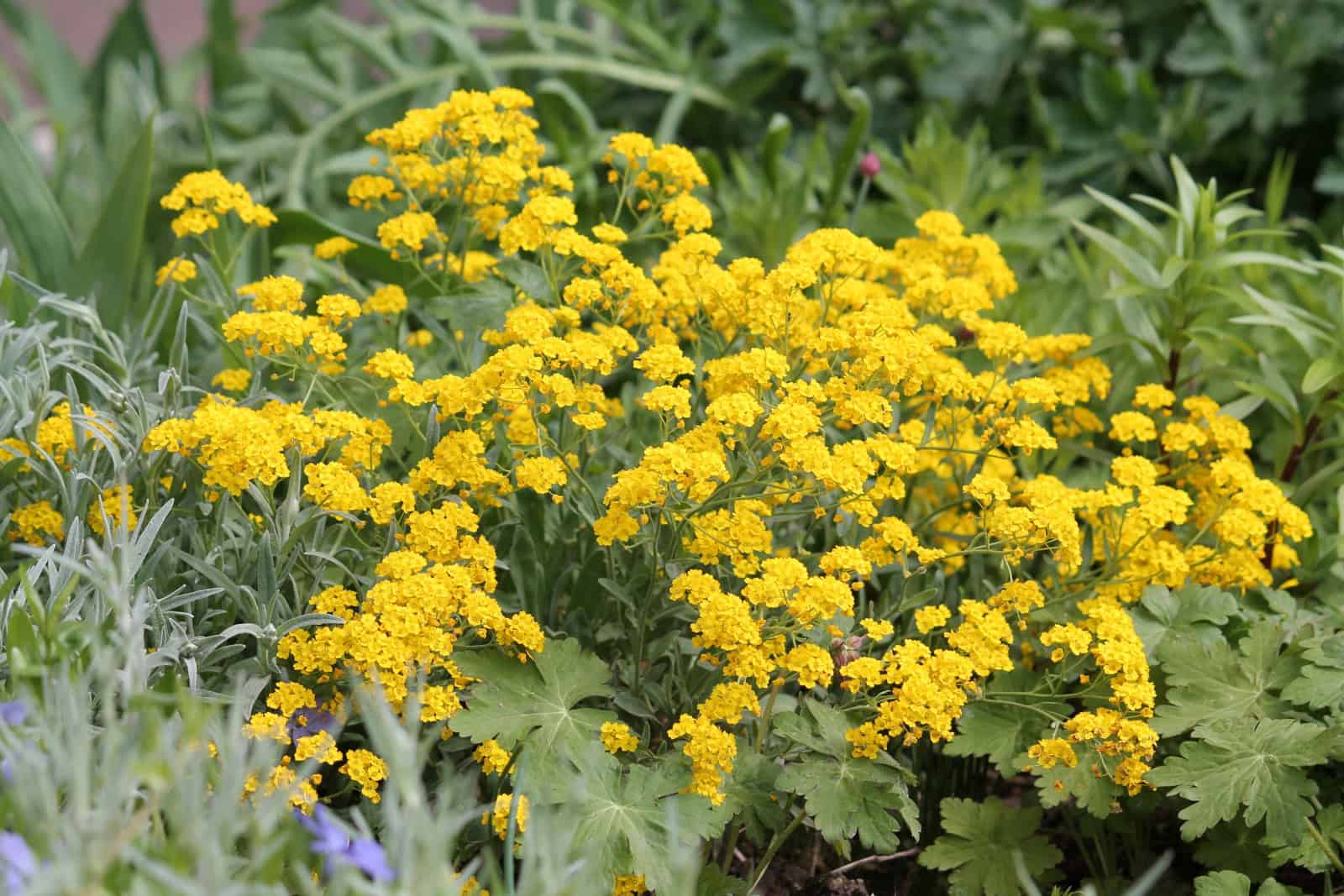
Golden alyssum (Alyssum saxatile) is massing with yellow flowers in a dense and low-growing mat across the soil in spring. Beyond looking pretty, the good thing it does is also available nectar for bees and butterflies. This is quite an easy care to ensure a bright color and weed-free garden.
Goldenrod
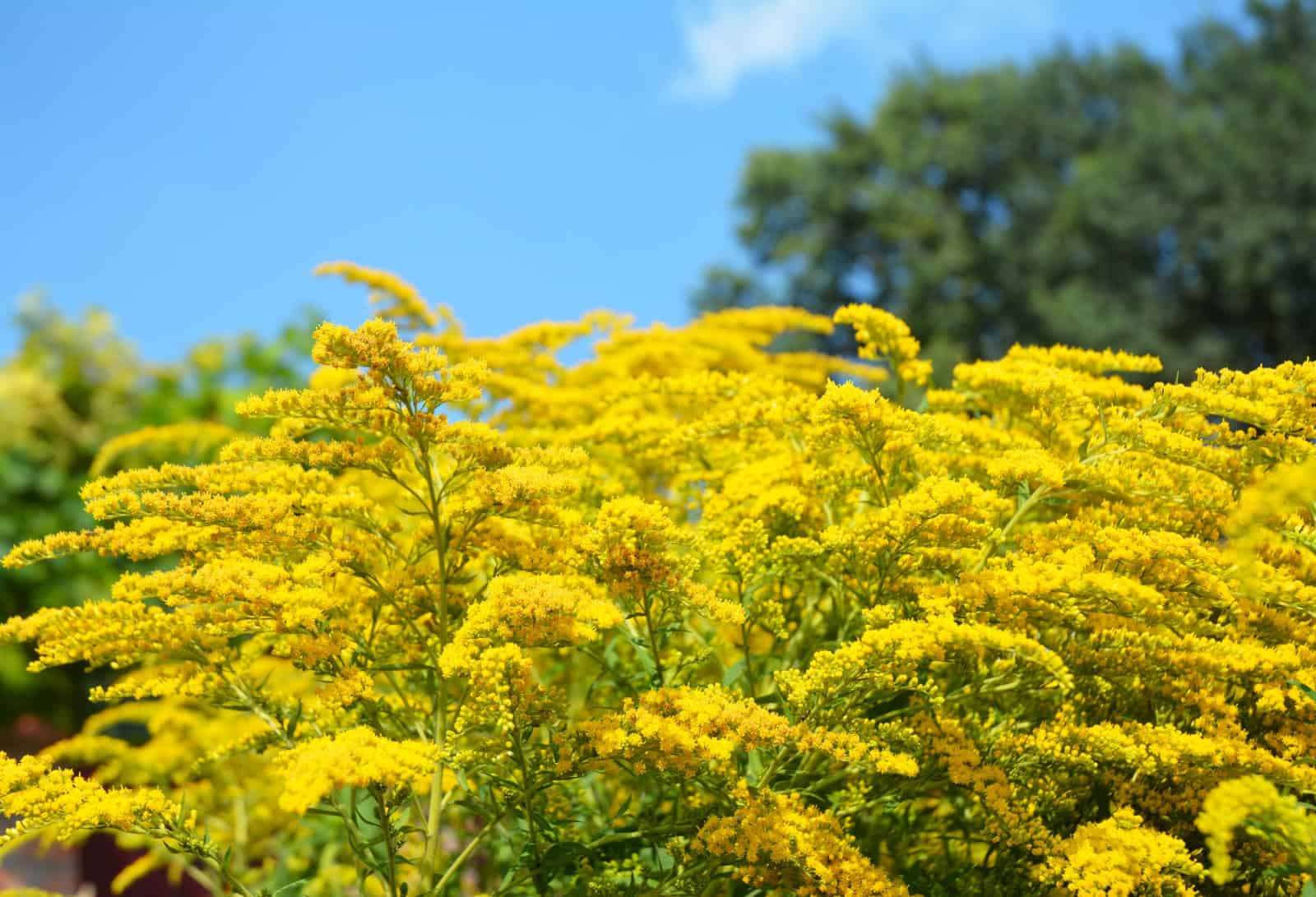
Goldenrod (Solidago spp.) is a native, late summer bloomer with tall yellow flower spikes for which bees and butterflies go wild. It is very dense, shading out weeds, but still requires low care to add height and color. Its value is to late-season pollinators, providing nectar when many plants have ceased blooming.