Perhaps you’ve been contemplating a start down the organic garden path, but this thought keeps getting in the way: “I’ve always used chemical fertilizers, pesticides and herbicides and I’m afraid that my plants won’t grow without them.”
Wherever you are right now, before humans arrived, plants most likely grew on that very spot without the benefit of lab-produced chemicals. Chemical fertilizers were conceptualized and developed in the 19th century but only put into wide use in the mid-twentieth century, which leaves… about a billion years that plants – every plant – grew without them. Big Agriculture has done such an excellent job of marketing their products that they’ve brainwashed consumers into believing that plants will downright choke to death without chemicals. I promise that won’t happen if you follow a few simple guidelines.
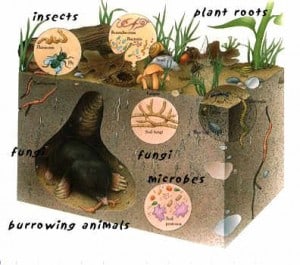
In your first season of organic gardening, you may experience some pest problems. This is because you’ve been dousing your garden with pesticides, killing the target insects as well as the beneficial insects, which has altered the “food web” of your garden: the “good” bugs, birds, and other creatures that used to eat the “bad” bugs have moved out to find food elsewhere. You may also find that your soil is somewhat depleted of nutrients, as it’s been depending on chemicals for many years. But don’t worry, the beneficial insects and nutrient levels will return and your garden will fall back into balance with some TLC.
Compost is a staple in organic gardening. Whether you make it yourself from kitchen scraps, have a local horse stable deliver manure, or buy bags of compost at the nursery center, your health, your plants’ health, and your soil’s health will benefit. Compost feeds your plants (and the soil) the way nature intended them to be fed and also supplies everything (and more) that chemical (synthetic) fertilizers supply. The difference is that granulated chemicals are water-soluble and are quickly taken up by plants, while compost supplies nutrients to plants via organic decay (slowly, but surely). If your plants need a boost, add fish emulsion, liquid seaweed, or compost tea to their regimen. These are all high in the nutrients that chemical fertilizers impart, but they also have the superpowers of bacteria, fungi, and micronutrients.
Organic mulches, to be specific. That means the kind or mulches made from pine bark, cedar wood, pine wood, or shrub and tree wastes (what you’ll typically find at your local municipal compost pile). Mulches help your soil retain moisture and add to the biological activity and decay that feeds your plants. They also regulate soil temperature to protect your plants’ roots from heatwaves and frost. Grass clippings and leaf mold can also be used as mulches, and are fabulous in compost as well.
Row planting and flat earth gardening is so…twentieth century. The most efficient way to plant your organic garden is with raised beds. That doesn’t mean you have to build an elaborate contraption. The simplest raised bed is without sides – just create a bed 3 feet across by however many feet long and layer top soil and compost until you get it at least 8 inches high. And never walk on it. Raising your beds this way helps with water drainage, warms the soil a bit earlier, keeps the soil biologically active and yields more intensive crops in less space. Read my post on how to build a raised garden bed.
Check out our gardening book reviews for some of the best. And don’t believe the marketing hype from chemical manufacturers – organic gardening is at least as productive as using synthetic chemicals, but is safer, cleaner, and environmentally friendly.
Introduction Welcome to the world of blogging! Whether you're a beginner looking to start your…
Introduction In the digital world, understanding and implementing Search Engine Optimization (SEO) is crucial for…
Introduction Every great blog post starts with a solid structure. A well-structured blog not only…
Introduction One of the biggest challenges for bloggers is consistently coming up with new and…
Introduction Growing a dedicated and engaged audience is a critical aspect of successful blogging. This…
Introduction A key aspect of successful blogging is not just creating great content, but also…