The living room is the center of any home. It’s where the family gets together to catch up, play games, enjoy a good show, or relax on the couch with a good book.
But despite its importance, the living room can easily become a source of frustration when common design mistakes get in the way. From furniture that’s awkward and always in the way, to decor that makes your space feel crowded, or even paint colors that make your home feel less inviting — all of these things can easily be avoided. And believe it or not, more people make these mistakes than you realize.
Advertisement
Whether you’re planning a complete renovation or just want to refresh your space over a weekend, understanding what to avoid can make the difference between a living room that works and one that doesn’t.
1. Buying Furniture Without Measuring the Room

It happens: you see a couch, you fall in love, and you immediately swipe your credit card and get it delivered to your house. Then, the couch gets there, and it takes nothing short of a miracle and the strength of God to get it in the room, where it promptly overwhelms everything else.
Before you make that must-have purchase for your living room, measure the total square footage and make sure that what you want isn’t too big (or too small, for that matter).
2. Buying Area Rugs That Are Too Small

If you have stone or wood floors, it may be tempting to buy a small area rug to add a bit of “decor” to the space. But if the rug you get is too small, it will look awkward and out of place in the space. It will, in essence, be worthless.
So how do you know what size to get? Follow this easy guide:
- Choose a rug large enough for all furniture legs to sit on it, or at minimum, the front legs of each piece
- Leave 12-18 inches of floor showing between the rug edge and walls
- For open plans, use the rug to define your seating area
3. Buying Area Rugs That Are Too Big

Likewise, buying an area rug that’s too big will overwhelm the room and make it look messy. A good rule of thumb is to get a rug that “touches” every piece of furniture in the room, so it can be tucked under it appropriately.
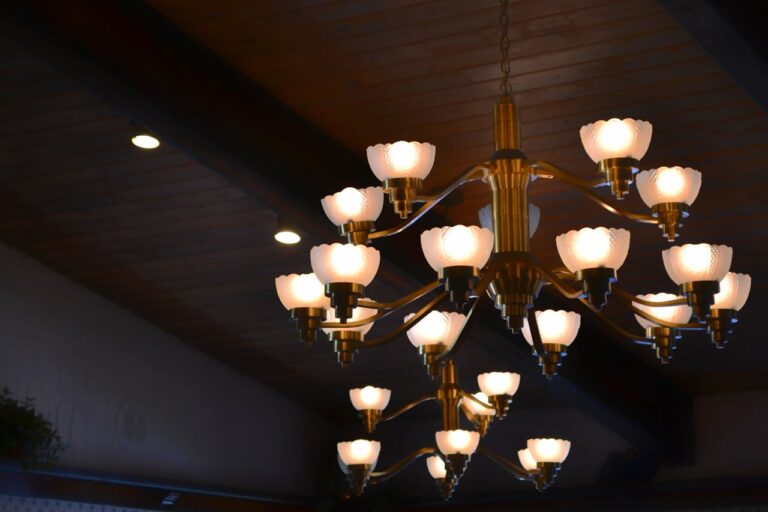
4. Not Enough Overhead Light or Lamps

Living rooms don’t need as much lighting as kitchens or home offices, but that doesn’t mean they need to be darker than a cave! Make sure you have enough overhead lighting or lamps to bring plenty of light into the room.
You might even consider installing dimmer switches to adjust lighting levels for different activities: bright for game nights and cleaning, softer for movie watching, or relaxing evenings. Position lamps near couches or armchairs where people might read or work on crafts. And remember, the light fixtures themselves can serve as decorative elements that enhance your room’s style while providing essential illumination.
5. Painting the Walls White

There was a time in the not-too-distant past when shows on HGTV encouraged homeowners to paint every wall in their house white. Every shade of white, from eggshell to ecru, was encouraged. Today, however, homeowners realize the importance of choosing colors that reflect their personalities.
6. Decorating Around Something You Can’t Stand

Whether it’s a family heirloom, an old piece of furniture from your college years, or just something that doesn’t work anymore, there’s nothing worse than keeping something in your living room that you just can’t stand.
Don’t decorate around it — just throw it out or donate it to charity. Habitat for Humanity accepts furniture donations nationwide.
7. Not Enough Functional Storage

The living room is the place where everyone congregates to relax, play, and watch television and movies. If you have young children, this also means that they’ll be bringing toys and games around. Not having enough storage — or no storage at all — will make the room look messy and cluttered.
Functional storage, such as an ottoman with a hidden compartment for blankets and game controllers, will go a long way in providing storage that keeps things tidy and pretty.
8. Too Many Tchotchkes

Either you’re a tchotchke person, or you’re not. If you’re a tchotchke person, do not get every type of tchotchke and put it out on the tables, chairs, and every other surface. Not only will it make the room look cluttered and messy, but it will be impossible to dust and keep clean.
Five tchotchkes of your choice are more than sufficient in any given room.
9. Sacrificing Comfort for Style

The point of a living room is to have a place where everyone can meet up, relax, and have fun.
As tempting as it may be to get a trendy, uncomfortable couch — or any other piece of furniture — don’t ever sacrifice comfort for style. You probably aren’t going to appear on the cover of Architectural Digest, and no one will judge you for securing a comfortable, affordable couch instead of a high-end piece of art.
10. Designing Around the TV

As TVs get bigger and bigger, and cost less and less, it’s become tempting to make the television the focal point of the living room and to choose every piece of furniture around it as though it’s a statue of a Catholic saint (or of Buddha, or Krishna, or Cthulhu, or the deity/demon of your choice).
However, the room will flow much better, and make more logistical sense, if the television is simply a functional part of the overall decor.
11. Hanging Artwork or Photos Too High on the Wall

If you have to crane your neck up to see the artwork or the photos, it’s too high on the wall. Instead, hang the artwork at or slightly above eye level. This way, your eye will be naturally drawn to it, and it won’t overwhelm the room.
This height creates a natural sight line and helps your art become an integrated part of the room rather than feeling like an afterthought floating near the ceiling.
12. Having Too Many Photos All Around

We’ve all been to Grandma’s house and seen all the old photos, in every type of frame, here, there, and everywhere. However, hanging photo frames indiscriminately can make the area look cluttered and unorganized.
Instead, consider a photo wall, and make that your “accent wall.” This way, your photo wall becomes a conversation starter and personal art installation rather than visual clutter. Plus, centralizing your photos in one area keeps the rest of your room feeling neat and tidy.
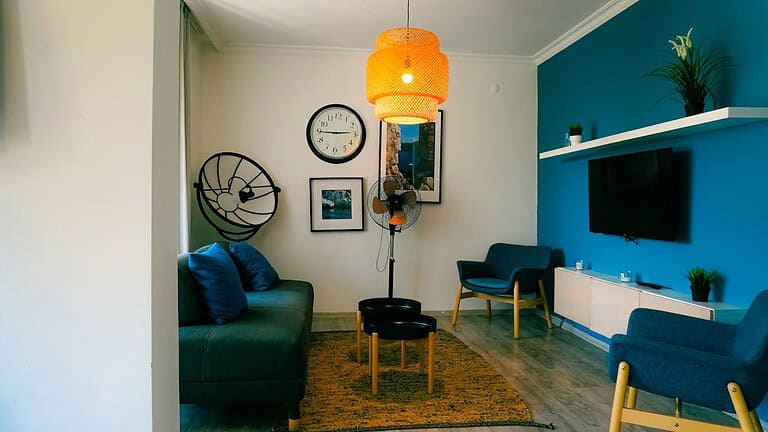
13. Choosing the Wrong Lampshade

The last thing you want is for everyone’s attention to be drawn to a weird lampshade in the middle of an otherwise calm, functional living room.
Make sure to get a lampshade that matches the rest of your color and decor scheme. While it’s tempting to choose something unique or dramatic, your lampshade should feel like a natural extension of your room’s overall design story.
14. Not Updating Your Crown Molding

Crown molding can be difficult, if not impossible, to take down from your walls. It can therefore be tempting to leave it in place when you’re redecorating your living room.
But if your crown molding is damaged or extremely outdated, keeping it on your walls will make the room look damaged and outdated, no matter how modernized it becomes.
15. Cords Hanging Everywhere

In today’s technologically advanced world, it’s all but inevitable that your living room wall will be awash with cords, cords, cords everywhere. Avoid making your room look like your office space by investing in some cord covers that easily attach to walls, or the back of furniture, and blend in with the space.
16. Too Many Focal Points

A shiplap wall. A photo wall. A wallpapered wall. A chalkboard wall. Too many “different” walls will lead to too many focal points in the room.
Remember: A well-designed room gives your eye a place to rest. Multiple statement walls create visual chaos that can make your space feel busy and unsettling rather than welcoming and relaxing.
17. Matchy-Matchy Prints and Colors

We understand that people have their preferred color palettes, but making everything all one color — whatever that color may be — will make your room feel flat and lifeless — like living inside a paint swatch.
Don’t be afraid to mix up colors and patterns, within reason, to give that room a fun and funky feel.
18. Clunky Furniture Everywhere

Even if you have a living room with high ceilings and more square footage than a New York City studio apartment, having large, clunky furniture everywhere will make it look small and crowded.
Choose one big piece of furniture — for a living room, that furniture should be the couch — and keep the rest of the furniture small and complimentary.
19. Cheap Window Treatments

You know those $29.99 curtains at Walmart that seem like a good bargain at the time? They’re not.
Not only will poorly made, cheap window treatments fall apart quickly (costing you more in the long run, because you have to keep replacing them), but it will kill the vibe of the whole room. Instead, splurging on nice, semi-permanent window treatments will not only look better but save you money in the long run.
20. Playing Too Much Into Modern Trends

There was a time, not so long ago when HGTV renovation shows featured open-concept everything. It didn’t matter if the home could withstand the pressure of getting walls ripped down from stem to stern, or if it even made sense with the age and the vibe of the house — just open concept everything, it will be fine!
The reality is, everything was decidedly not fine. Playing too much into modern trends, especially if you have an older home, will force you to redecorate your living room in 5 years or less. Wouldn’t you rather save your money?
21. Making the Space Too Formal

It cannot be stated enough: the living room is the place for everyone to relax, get together, and have fun. Making the space too formal will take away from the fun, playful nature of a living room.
The living room isn’t meant to be a museum where everyone’s afraid to sit down or put their feet up. It’s your home’s comfort zone — a place where kids can build pillow forts, friends can laugh over board games, and family movie nights include actual popcorn without fear of ruining the “perfect” sofa.
22. Too Many Colors and Patterns

On the opposite end of the “matchy-matchy” spectrum are people that throw every color and pattern together, and hope for the best. Let’s not do that, shall we? A good rule of thumb is, no more than two colors and patterns in a given room, and that includes the living room.
Think of it like composing music — you need a main melody (your primary color and pattern), supporting harmonies (secondary choices), and occasional grace notes (small accents). Too many competing elements create chaos, but too few can fall flat. The goal is to create a space that’s visually interesting while remaining pulled together and intentional.
23. Too Many Wood Tones

If you’re someone who likes the “wood” look — be it in the form of furniture, flooring, wall shiplap, or some combination of all of the above — it can be tempting to get wood tones in every shade and style.
That, however, will make your living room look messy and sloppily decorated. Choose one, or two, wood tones at most to give your room a warm, welcoming feeling.
24. Plastic Couch Covers

This is not 1975, you are not staying at your grandmother’s house, and you don’t need those plastic couch covers. (Why. Just why.)
Today’s couches are made with easily washable fabric, so you don’t have to add this ugly, unnecessary addition to your living room. Your kids will thank you for it.
25. Doing It All in One Day… or Trying To

HGTV has brainwashed an entire generation of homeowners into believing that anything and everything can be done in the home in one hour or less. Therefore, it seems all but a given that one would think redecorating a living room would take a day…or less.
The reality is, redecorating a living room can take weeks, or even months, to finish. Be patient with yourself, and others, and trust the process.