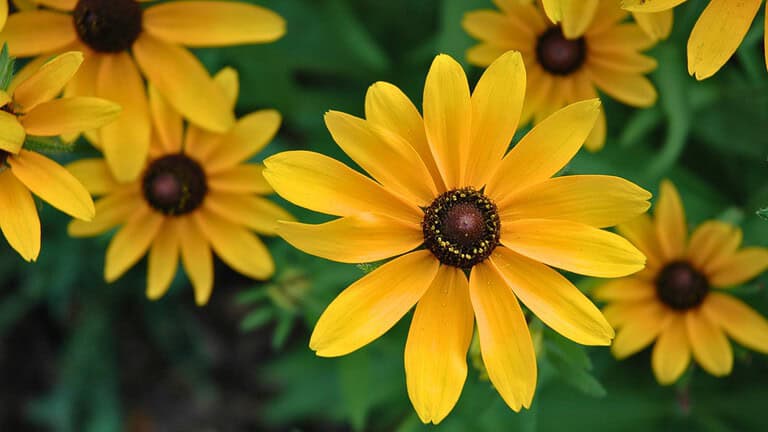
Some plants are nice to have, and then there are the ones that make you do a double take. The ones with huge, jungle-like leaves or flowers so bright they barely look real. If your houseplant collection feels a little too basic, adding a few exotic plants can shake things up.
The best part? You don’t need to be a plant expert to keep them alive. A lot of these are just as easy to care for as the usual houseplants—some even thrive on a little neglect. Whether you want something big and dramatic or just a plant that’s different from the rest, these picks bring a whole new vibe to your space.
Advertisement
Amazonian Elephant’s Ear
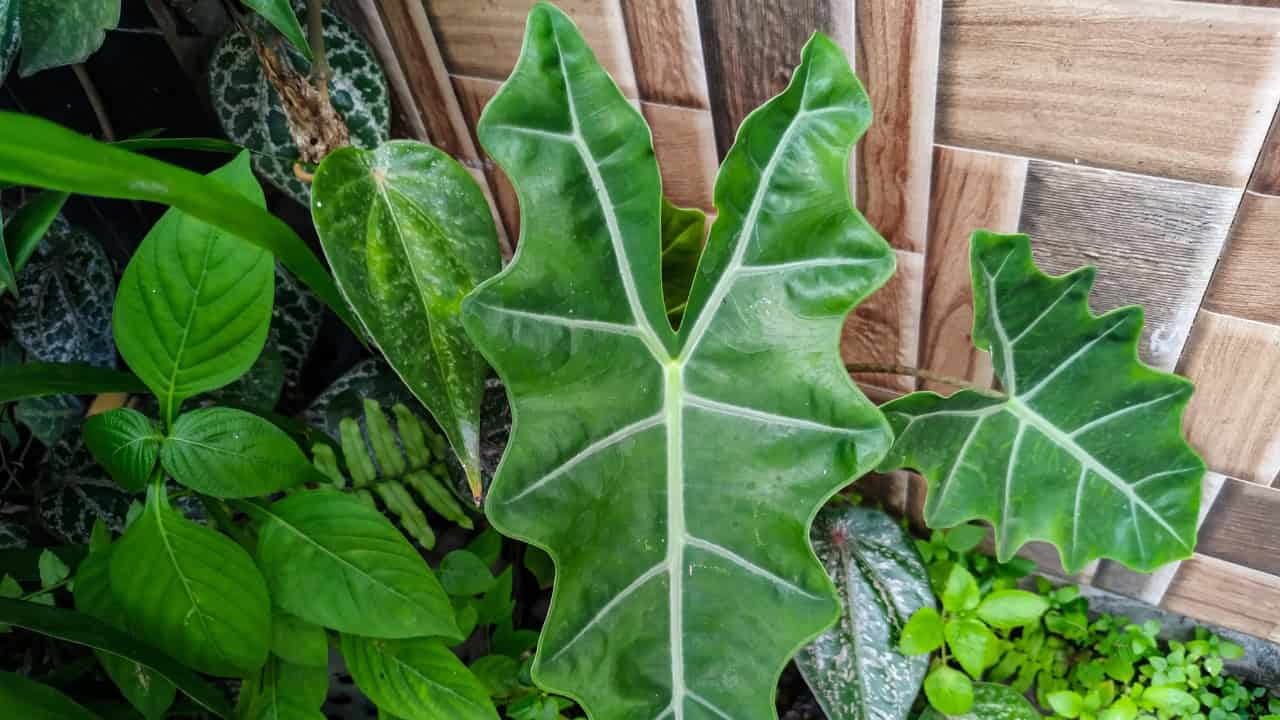
Amazonian Elephant’s Ear looks like it belongs in a rainforest. Its deep green, arrow-shaped leaves have bold silver veins that make it stand out from your average houseplant. It’s one of the easier Alocasia varieties to grow indoors, so you get that big, dramatic foliage without the usual struggle.
It does best in fast-draining soil and needs regular feeding to keep those leaves looking sharp. Keep the soil moist but not soggy, and give it filtered sunlight or partial shade. Since it’s toxic to pets and people, it’s best kept where no one’s tempted to take a bite.
Goldfish Plant
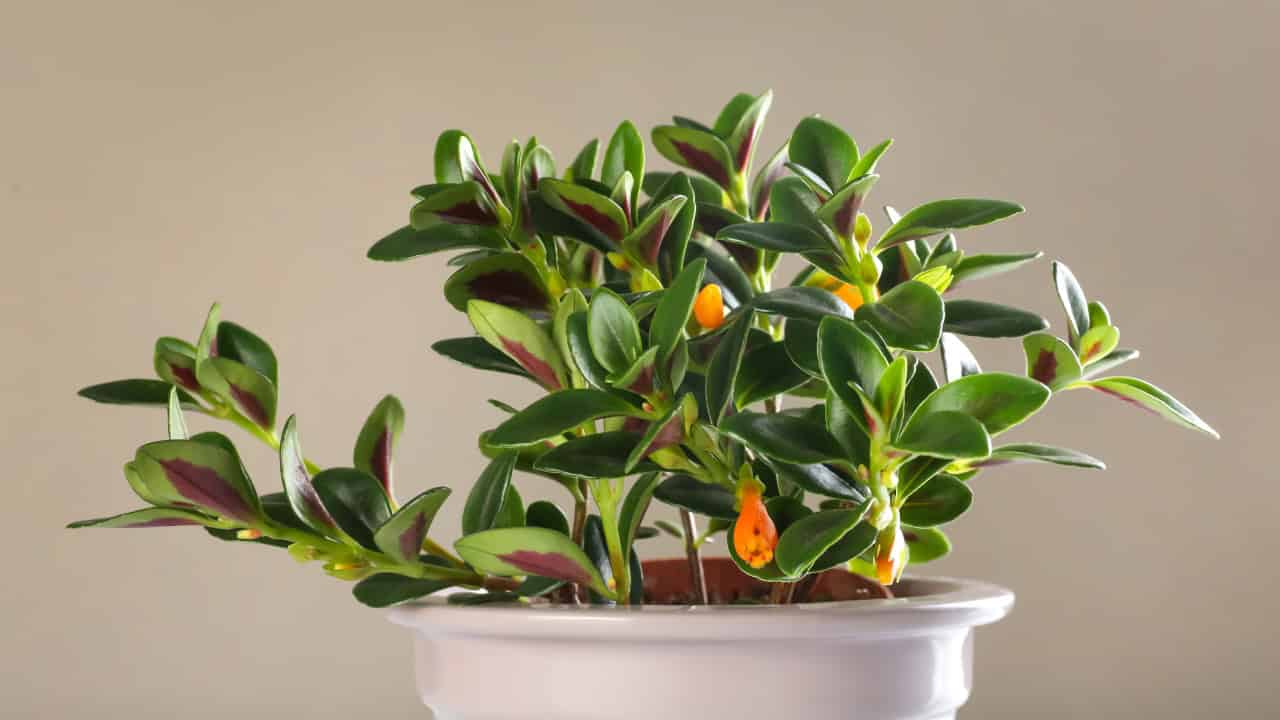
Goldfish plants are just plain fun. Their trailing vines spill over the edges of pots, and in the right conditions, they bloom with tiny, bright orange or yellow flowers that look like little fish. If you want a houseplant that stands out without being fussy, this is a solid choice.
They like bright, indirect light and warm temps between 65–75°F. Water regularly during spring and summer, then cut back in winter when they slow down. Since they love to trail, they’re perfect for hanging baskets or high shelves where those blooms can really shine.
Bromeliads
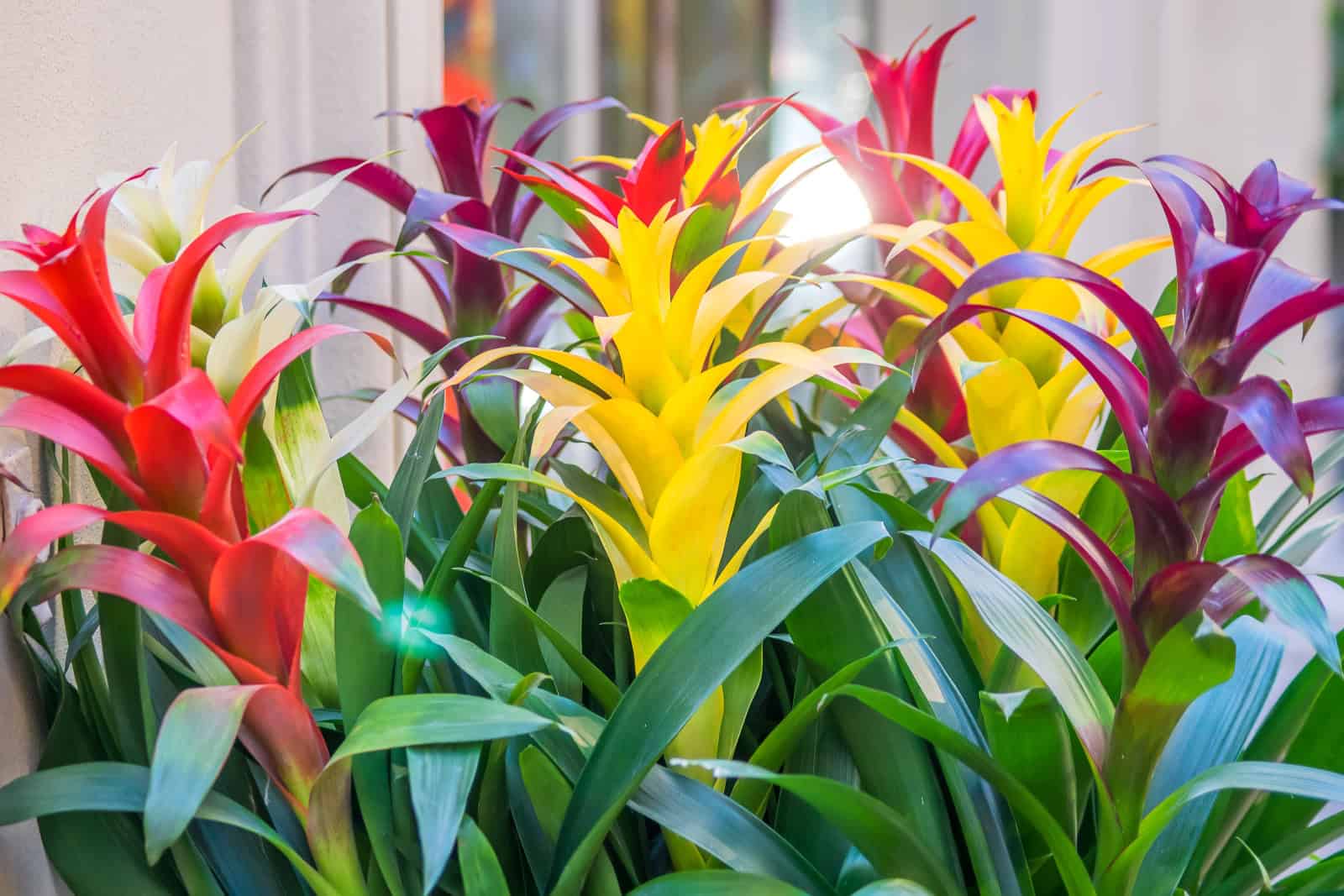
Bromeliads are some of the easiest tropical plants to grow, making them perfect for anyone who loves bold colors without the hassle. They come in shades of red, green, purple, orange, and yellow, often with striking patterns that make them stand out. These plants don’t need much to thrive—just bright, indirect light and well-draining soil.
Since they’re epiphytes, bromeliads don’t even need to be potted. You can mount them on boards, attach them to logs, or let them grow in a pot with sandy, peat-based soil. Once they bloom, the parent plant starts to fade, but don’t worry—it will send out “pups” that keep the cycle going.
Anthurium
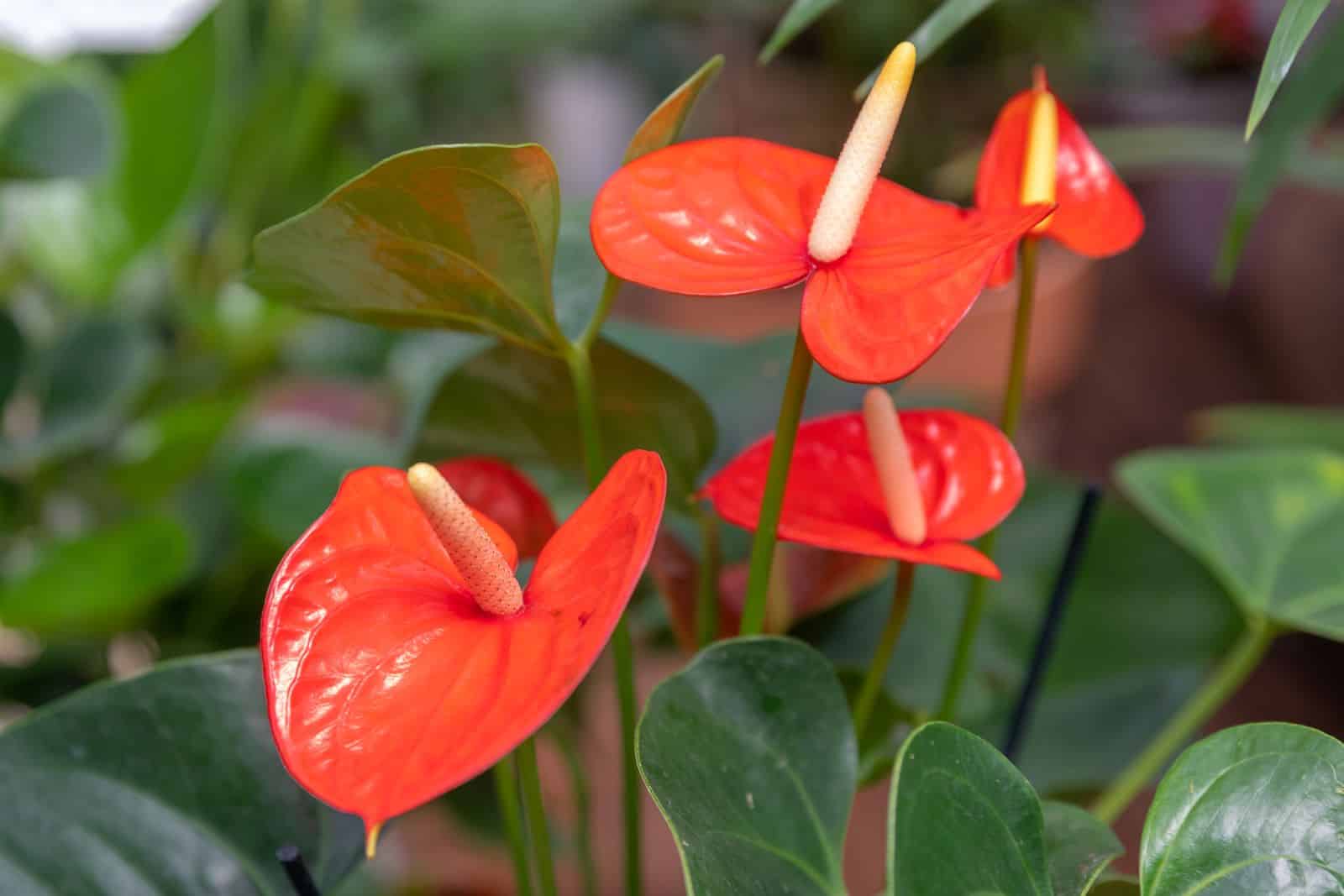
Anthuriums are all about bold color. Their glossy, heart-shaped leaves and bright red flowers make them a striking addition to any indoor space. They’re not the easiest to grow, but if you get the conditions right, they’re worth the effort.
These plants need loose, rich soil and consistent moisture, but their roots hate sitting in water. Bright, indirect light is best—too much sun will scorch the leaves. Keep in mind that anthuriums are toxic to pets and people, so if you have curious kids or animals, this might not be the best plant for your space.
Schefflera (Umbrella Plant)

Schefflera is a solid choice if you want a plant with big, glossy leaves that create a full, bushy look. It’s sometimes called the umbrella plant because of how its leaves fan out, and when grown indoors, it can reach up to six feet tall.
This plant loves warmth, humidity, and bright, indirect light. If you give it the right conditions, it might even bloom with small red flowers, though that’s rare indoors. Keep the soil consistently moist but not soggy, and fertilize regularly to keep it growing strong. Be aware that schefflera is toxic to pets and mildly toxic to humans, so it’s best kept out of reach.
Watermelon Peperomia

Watermelon peperomia is small but eye-catching, with rounded leaves that look just like the rind of a watermelon. It’s a great option if you want a unique plant without the fuss—its care routine is about as easy as it gets.
This plant thrives in bright to medium indirect light and likes its soil to stay slightly moist. Too much water can cause root rot, so let the top inch dry out before watering again. It stays compact, maxing out around a foot tall, making it perfect for desks, shelves, or anywhere you want a little greenery without taking up much space.
Swiss Cheese Plant (Monstera)
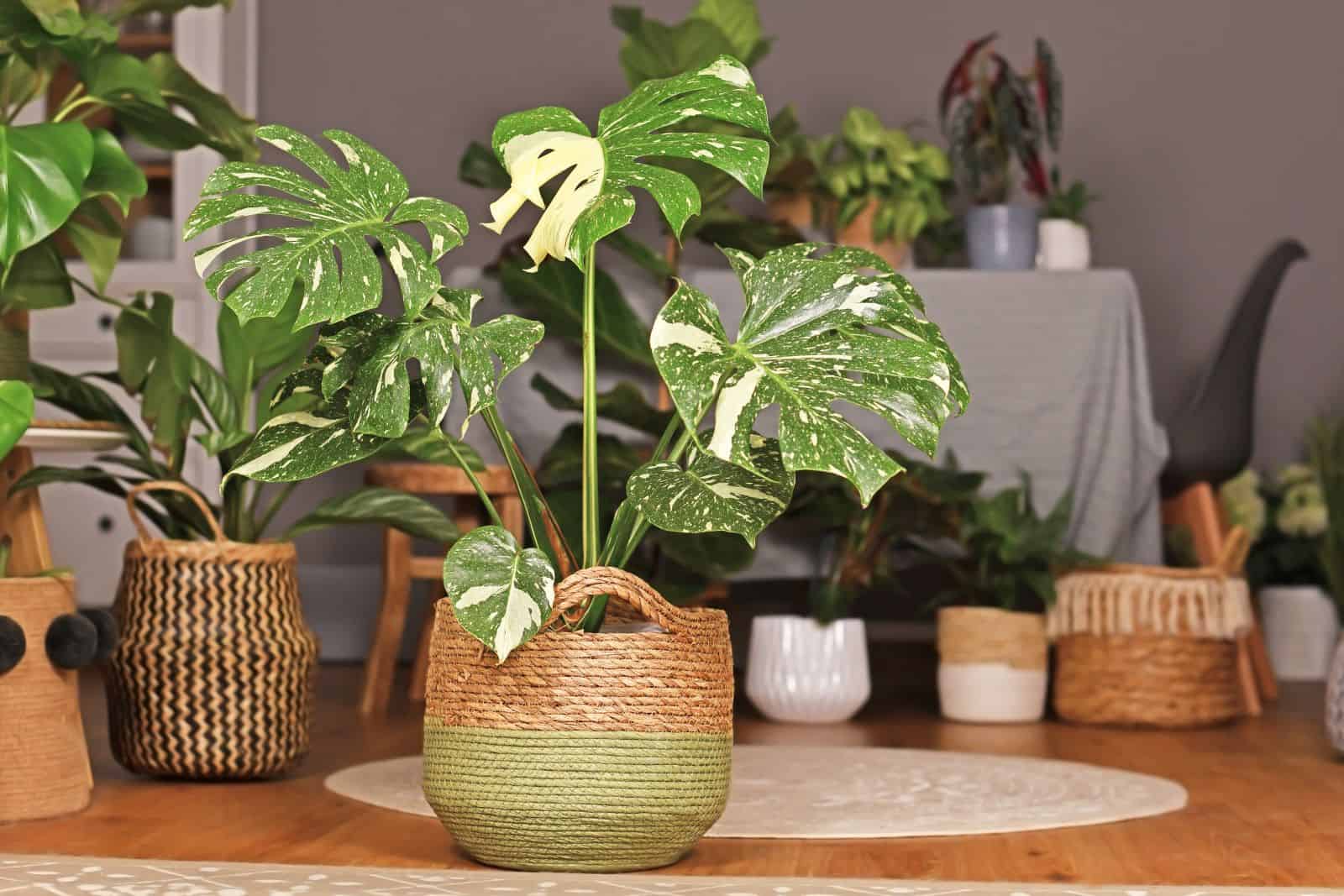
Monstera makes a space feel more alive. Its big, glossy leaves start out solid, but as the plant matures, they split and develop holes, giving it that signature “Swiss cheese” look. It’s a natural climber, so if you want it to thrive, give it a moss pole or a sturdy stake to latch onto.
It looks high-maintenance, but Monsteras are surprisingly easy to care for. They do best in bright, indirect light and like their soil to dry out a little between waterings. They also love humidity, so if your house is on the dry side, an occasional misting won’t hurt. If you ever want to expand your plant collection, Monsteras are a breeze to propagate—just snip a cutting with a node, pop it in water, and wait for roots.
Bird of Paradise (Strelitzia)

If you want a plant that catches eyes, Bird of Paradise is it. Its huge, paddle-shaped leaves give off a serious tropical feel, and if you’re lucky, you might even get its bright, bird-like flowers to bloom indoors. This one needs space, though. It can grow over five feet tall and just as wide, so it’s not the best pick for small apartments unless you’re ready to let it take over.
Strelitzia loves bright, indirect light and a warm, humid environment. During spring and summer, keep the soil consistently moist, but don’t let it sit in water—these plants hate soggy roots. In the cooler months, ease up on watering to avoid rot. If you want those famous flowers, be patient. It can take several years for an indoor plant to bloom, but even without flowers, the dramatic leaves make it worth having.
Amaryllis
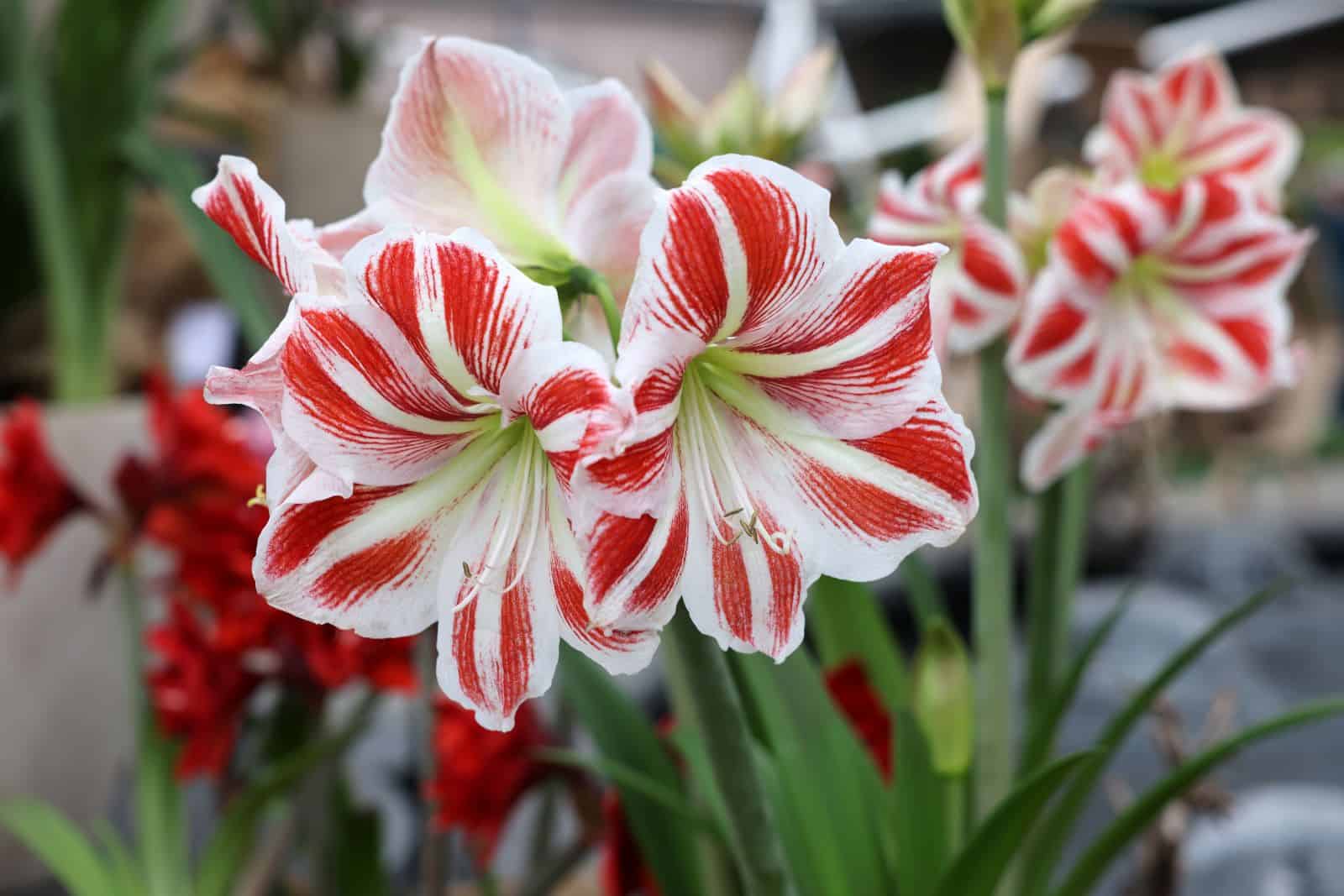
Most people think of amaryllis as a one-and-done holiday flower, but it’s actually a tropical plant that can bloom year after year if you treat it right. Grown from a bulb, it shoots up a tall, sturdy stem topped with huge, trumpet-shaped flowers that come in deep reds, crisp whites, or even greens.
Getting an amaryllis to bloom isn’t hard, but it does take a little patience. Plant the bulb in well-draining soil with the top third exposed, and keep it in bright, indirect light. Water lightly at first, then increase as the shoot grows. Once the flowers fade, don’t toss the bulb—let the leaves grow out so it can store energy for the next blooming season. With a little care, you can get new flowers year after year.
Majesty Palm

If you want a plant that gives instant tropical appeal, Majesty Palm is a solid choice. It can reach up to 10 feet indoors, with long, arching fronds that add some drama to any space. These palms grow slow, so if you want an immediate impact, buy a larger one from the start.
Majesty Palms thrive in bright, indirect light and need consistent moisture—water when the top third of the soil is dry, but don’t let it dry out completely. They’re native to Madagascar, so they love humidity. If your home is on the dry side, setting the pot on a pebble tray with water or misting the leaves can help keep it happy. Just keep it away from vents and heaters, or the fronds will crisp up fast.
*This article was created with the help of AI.